

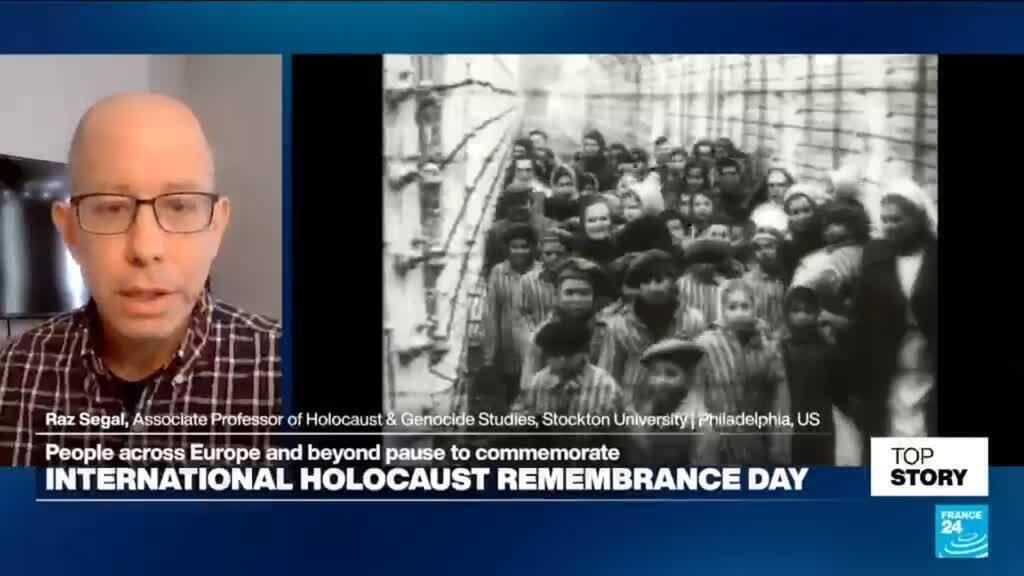
Reflecting on the Holocaust: Insights from Dr. Raz Segal
Mark Owen recently had the opportunity to engage with Dr. Raz Segal, an esteemed Program Director and Associate Professor of Holocaust and Genocide Studies at Stockton University. As we commemorate International Holocaust Remembrance Day, Dr. Segal provides an insightful examination of contemporary reflections on the Holocaust. He delves into the significant implications of these memories, particularly their influence on our capacity to identify and address current instances of mass violence and genocide around the world.
Revisiting Our Understanding of Holocaust Memory
Dr. Segal invites us to rethink traditional narratives surrounding the Holocaust. Rather than simply extracting “lessons” for the future, he emphasizes the need to critically analyze how this historical event is remembered and understood today. In doing so, he questions the role of state institutions in safeguarding individuals who are vulnerable to persecution.
Challenging Conventional Wisdom
According to Dr. Segal, the prevailing belief that the lessons of the Holocaust are universally applicable can be misleading. He points out that while many advocates suggest that learning from the past can offer protective mechanisms against future atrocities, the reality is often more complex. “State institutions promote the interests of states; they don’t protect people targeted by the state,” he asserts, highlighting a critical disparity that can impact how societies prepare for and respond to genocide.
Connecting the Past to the Present
The reflections Dr. Segal provides are not just an academic exercise; they serve as a vital reminder of the responsibilities we bear towards those who continue to suffer from violence and repression today. By assessing how we memorialize the Holocaust, we can better understand our collective duty to advocate for justice and protection against similar threats in contemporary contexts.
Conclusion
Dr. Raz Segal’s insights on the memory of the Holocaust challenge us to rethink not only how we remember this horrific past but also how our reflections can shape a more compassionate response to present-day crises. His perspective invites a conversation about the effectiveness of state mechanisms in safeguarding its citizens against violations of their rights, urging us toward a deeper understanding of our role in the face of injustice.
Key Takeaways:
- Dr. Raz Segal emphasizes the importance of critically analyzing the lessons drawn from the Holocaust.
- State institutions often prioritize state interests over the protection of targeted individuals.
- Reflecting on historical events like the Holocaust can shape our responses to contemporary genocides.
- We bear a moral responsibility to advocate for justice in today’s world.