

Initial Findings on the Deadly Train Derailment in Spain
Recent investigations have revealed that a fracture in a straight section of railway track played a crucial role in the devastating train derailment that occurred last Sunday. This tragic incident claimed the lives of 45 individuals and led to extensive injuries. The train operated by the private company Iryo derailed before colliding with an oncoming Renfe train. This article delves into the preliminary findings and underscores key aspects of this unfortunate event.
Details of the Incident
The derailment took place around 19:45 local time (18:45 GMT), shortly after the Iryo train departed from Málaga en route to Madrid. During the accident, the last three carriages of the Iryo train—specifically carriages six to eight—made contact with the Huelva-bound Renfe train. The initial report highlights that carriage six derailed entirely due to a significant break in the railway track.
Investigation Focus
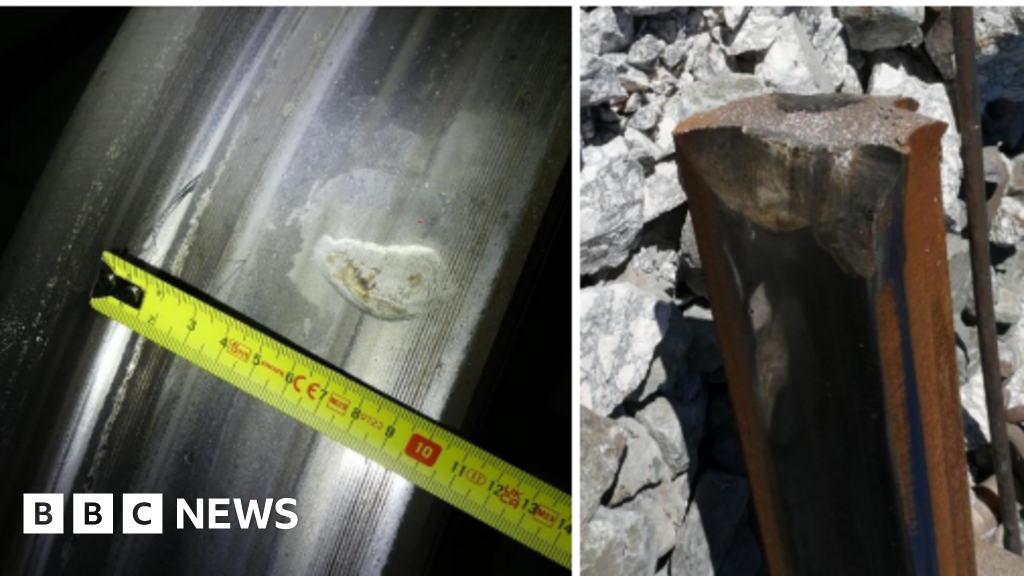
Current investigations led by the CIAF rail investigation commission have shifted attention to a nearly 40cm (15in) gap found in the track. Interestingly, not only did the front carriages of the Iryo train feature noticeable “notches” in their wheels, but three earlier trains that traversed the same track also exhibited similar issues.
Grooves and Track Safety
In a statement earlier this week, Spanish Transport Minister Óscar Puente confirmed the presence of grooves on the wheels of the Iryo train. These grooves were deemed compatible with previous reports of track damage. The CIAF’s preliminary findings suggest that the deformation on the track correlates with the fractures observed, pointing to the track’s compromised safety.
Pattern of Wheel Damage
These anomalies were noted on the wheels of carriages two, three, and four of the Iryo train, while carriage five, which fortunately did not derail, showed signs of an outward tilt. This raises concerns that the track had already begun to warp before the incident occurred, which could explain the lack of warning signs preceding the accident.
Next Steps and Context
The CIAF’s report is being approached as a “working hypothesis,” indicating that further analysis and calculations will be required to confirm the findings. While Minister Puente has urged patience regarding definitive conclusions, he also suggested that if the track fracture was indeed the catalyst for the derailment, it likely occurred only moments prior to the accident, rendering it undetectable.
This tragedy marks Spain’s deadliest rail crash in over a decade, surpassing the tragic 2013 derailment in Galicia that resulted in 80 fatalities and over 140 injuries. The rail safety community aspires to glean vital lessons from this incident to avert similar disasters in the future.
Conclusion
The recent train derailment in Spain has unveiled serious safety concerns regarding railway infrastructure. Investigations are ongoing, and the rail community is looking closely at the findings to prevent future occurrences of such a heartbreaking nature.
- A significant fracture in the track led to the recent train derailment in Spain.
- Initial reports indicate that previous trains had exhibited similar wheel damage.
- The investigation is still ongoing, with further analyses required for clarification.
- This event is a stark reminder of the importance of rail safety and infrastructure maintenance.