

Tragedy Strikes: Understanding Spain’s Recent High-Speed Train Crash
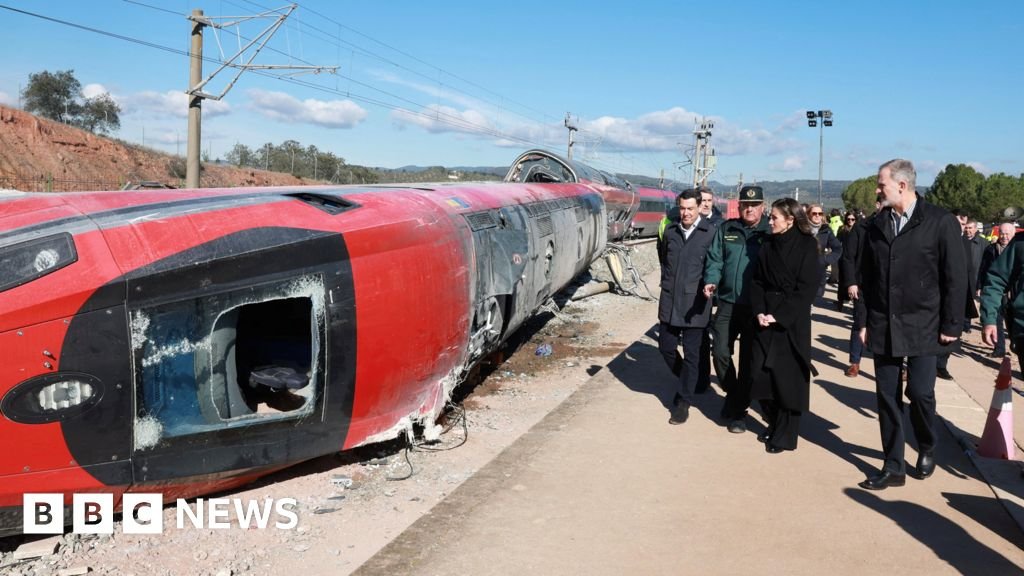
On Sunday, Spain witnessed a heart-wrenching disaster when a high-speed train derailed in the southern region of the country, resulting in the tragic loss of at least 42 lives. This incident, marking the worst train crash in over a decade, has sparked widespread concern and questions regarding the safety of one of Europe’s leading rail systems. As many seek answers, the CIAF rail investigatory commission has begun to examine the details surrounding this catastrophic event, including the circumstances that led to the derailment.
Incident Overview
During the incident, a train traveling north from Málaga derailed on a straight stretch of track, leading to a collision with an oncoming train that also went off the rails. This unexpected failure has left the nation in shock, particularly in the quiet town of Adamuz where the disaster unfolded. Three bodies were recovered from the wreckage on Tuesday, with the 42nd victim discovered that same afternoon.
Spain’s high-speed rail network, known as AVE, has been a source of national pride since its inauguration in 1992. Funded by EU resources, it was heralded for its modernity and excellence in transportation. However, this catastrophe brings to mind a previous derailment near Santiago de Compostela in 2013 that claimed 80 lives, which was not part of the AVE system. Interestingly, the collision occurred on the original AVE route connecting Madrid with Andalusia.
Investigative Efforts
The Spanish government has deemed the incident as “extremely strange,” considering various factors during the investigation. Initial findings suggest that human error is likely not a contributor, as both trains were operating within safe speed limits. Interior Minister Fernando Grande-Marlaska has dismissed the possibility of sabotage as well.
Investigators are focusing heavily on the train involved, owned by the Italian company Iryo and manufactured in 2022. Transport Minister Óscar Puente indicated that carriage number six, the first to derail, would be scrutinized for clues. Additionally, the track itself is under investigation, especially since it has been reported that a segment of the track was broken. However, authorities are cautious not to jump to conclusions regarding the cause, noting that damage might have occurred due to the collision impact.
Concerns About Rail Infrastructure
Attention has been drawn to several underlying concerns regarding network safety. Over the past year, the rail infrastructure administrator, Adif, highlighted eight technical issues related to signaling near the accident’s location. Notably, there was a discussion in the Senate regarding one of these issues last summer. Furthermore, Adif has already imposed a reduced speed limit of 160 km/h on a stretch of AVE line between Madrid and Barcelona, concerned about the overall condition of the tracks.
Social media observers quickly pointed out previous complaints regarding train discomfort and vibrations from passengers. In a statement issued by the train drivers’ union, Semaf, in August 2025, concerns were raised about the condition of several AVE lines. They called for speed limit reductions to mitigate infrastructure decay and ensure traveller safety.
Despite these complaints, the government maintains that significant investments have been made to improve track quality. Last year, €49 million was spent on renovations for the section where the crash occurred, as part of a larger €700 million plan to upgrade the Madrid-Andalusia network in recent years.
Conclusion
As investigations continue, Prime Minister Pedro Sánchez has promised to provide clear and transparent answers once they are determined. This tragic event holds significant implications for the future of Spain’s celebrated high-speed rail system, and the nation mourns alongside those affected by this disaster.
Key Takeaways
- The recent train crash in southern Spain claimed at least 42 lives and marked the worst rail disaster in over a decade.
- Investigators are examining both the trains and the track for potential causes, with a focus on the derailed carriage.
- Safety concerns regarding the AVE network have been raised, particularly relating to prior technical issues and infrastructure quality.
- The government plans to address the findings of the investigation with full transparency once all information has been gathered.