

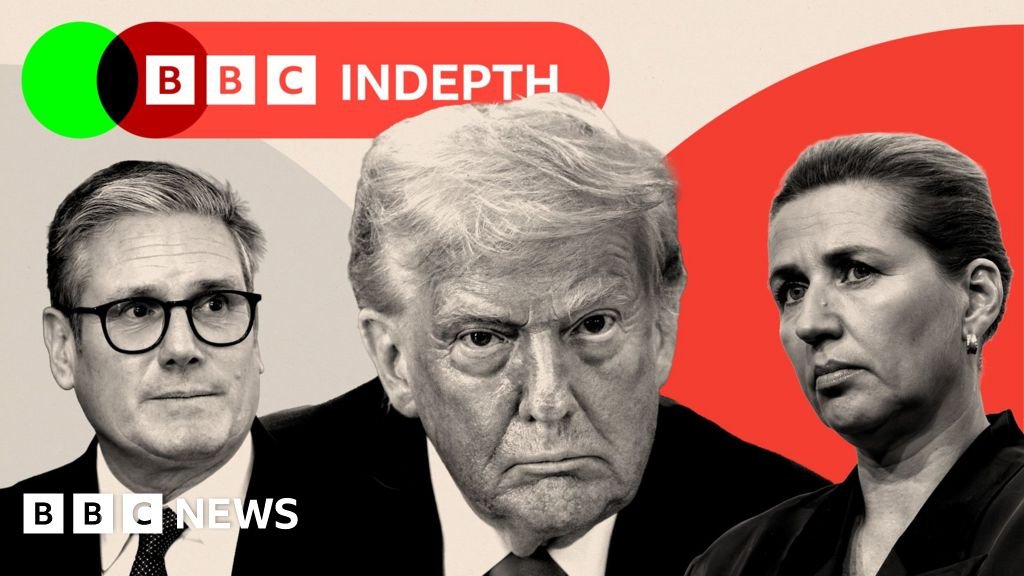
Europe’s Response to Trump’s Greenland Controversy
In a surprising turn of events, Donald Trump has reiterated his belief that the United States “has to have” Greenland, citing national security interests. While the US president anticipates that European leaders will not react strongly, Europe’s strategy may differ significantly. As they prepare to meet at the World Economic Forum, tensions surrounding Greenland and Trump’s aggressive posture towards European nations come into sharper focus.
Trump’s Greenland Ambitions
Greenland, a semi-autonomous region of Denmark, has caught Trump’s attention, especially as he pressures Denmark’s allies to set aside their support for Copenhagen in favor of US control. The prospect of punitive tariffs on exports to the US looms large, striking fear into European economies already facing difficulties, particularly industries like Germany’s automotive sector and Italy’s luxury goods market.
The Impact of Tariffs
The German Minister of Finance made it clear that Germany would not succumb to blackmail in light of Trump’s threats. With potential tariffs hanging in the balance, European governments perceive these actions as a challenge to longstanding alliances. France’s Finance Minister expressed concern over the unprecedented nature of a nation traditionally regarded as an ally using tariffs as a geopolitical tool.
Strategies Under Pressure
The diplomatic approach that European leaders have taken toward Trump is starting to show signs of strain. Historically, the EU has favored a “good cop, bad cop” strategy in dealing with the US president. However, the need for a more assertive stance is gaining traction.
Cooperation on Arctic Security
European leaders are signaling their willingness to support Trump in matters of Arctic security, urging him to avoid unilateral actions concerning Greenland. Meanwhile, discussions of retaliatory tariffs worth billions on US goods have emerged as a possible countermeasure if Trump implements his proposed tariffs.
The EU’s Position
The European Union, despite its often fragmented nature, remains a significant force in global trade, accounting for nearly 16% of world commerce. As Brussels prepares to engage with Trump, the hope is that he will reconsider his hardline stance in favor of diplomacy.
Balancing Power and Security
The EU is acutely aware that Trump’s actions could alienate allies and ultimately drive up costs for American consumers. The underlying focus remains on maintaining strong transatlantic ties, essential for addressing broader security concerns, including the situation in Ukraine.
The Delicate Balance
While European leaders need to confront Trump’s brash tactics, they also face the reality of their reliance on the US for security, particularly in the context of rising threats from nations like Russia. The rhetoric from US Treasury Secretary paints a picture of an administration fixated on acquiring Greenland not just as land but as a strategic asset.
Domestic and International Implications
Europe’s worry is that firm action might jeopardize transatlantic relations further, but inaction could be disastrous. The need to project strength to nations like Russia while ensuring peace and cooperation with the US is becoming increasingly complex.
Global Perspectives
As the situation unfolds, it draws attention from global powers, including China and Russia, who may see an opportunity to exploit the fractures within Western alliances. President Trump’s approach seems to favor unilateralism, prompting concerns over the future viability of international organizations like the UN.
Future Directions
Despite existing tensions, transatlantic relations aren’t irreparable. Lines of communication remain open, but Europe must strive for unity in its approach moving forward. The relationship hinges on balancing domestic pressures against the need for international collaboration.
Conclusion
As Europe navigates the treacherous waters of US foreign policy under Trump, the stakes are high. Greenland has become a contentious issue that could redefine alliances and trade relationships across the Atlantic. Strategies will be critical in ensuring both the preservation of sovereignty and the continuation of cooperative security measures.
- Trump’s insistence on acquiring Greenland for security reasons raises alarm in Europe.
- Potential tariffs threaten European economies, prompting a firm response from leaders.
- The EU seeks a balance between diplomacy and assertiveness in dealing with the US.
- Strong transatlantic ties are essential for addressing broader global security concerns.