

US-Denmark Relations: Greenland Takes Center Stage
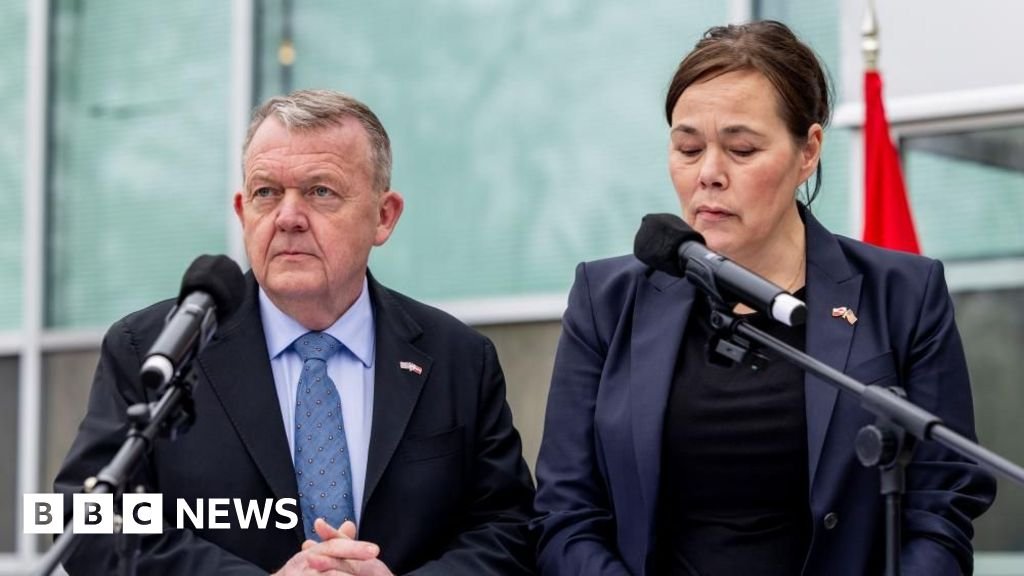
The ongoing discussions between the United States and Denmark regarding Greenland have made headlines, showcasing the complexities of geopolitical relationships. Danish Foreign Minister Lars Lokke Rasmussen recently noted a significant divergence in perspectives on the future of this resource-rich territory during meetings at the White House. This article captures the latest developments in this unfolding story and the implications for international relations.
Key Discussions at the White House
In a detailed discussion with Vice President JD Vance and Secretary of State Marco Rubio, Rasmussen characterized the meeting as “frank but constructive.” Despite a generally positive tone, he emphasized that the US viewpoint of wanting to “conquer” Greenland is entirely unacceptable to Denmark. “We made it abundantly clear that this is not in Denmark’s best interest,” he stated.
A Stalemate, Yet a Willingness to Communicate
While no significant agreements were reached during this hour-long session, all parties consented to forming a high-level working group aimed at exploring the future of Greenland. Rasmussen expressed that certain “red lines” exist that the US must not overstep. This working group is slated to meet in the coming weeks to seek a middle ground.
Security Concerns on the Rise
Rasmussen acknowledged some validity in Trump’s assertions regarding the need for enhanced security measures to counter Russian and Chinese influences in the Arctic region. However, he was quick to clarify that claims regarding the presence of Russian and Chinese warships near Greenland are inaccurate.
Why Greenland Matters
Greenland, though sparsely populated, holds a strategic position between North America and the Arctic. This makes it ideal for surveillance systems in the event of missile threats and for monitoring maritime activities. Trump has been vocal about the necessity of acquiring Greenland, asserting that it is essential for US national security. Currently, the US maintains a presence at its Pituffik base in Greenland, operational since World War II, with more than 100 military personnel stationed there.
Greenland’s Position
Vivian Motzfeldt, the Foreign Affairs Minister of Greenland, expressed the territory’s openness to increased collaboration with the US but firmly opposes any attempts of takeover. “We have clearly defined our limits,” she remarked.
Support from European Allies
As discussions unfold, European allies are rallying to support Denmark’s stance on Greenland. Sweden has committed to sending armed forces to the territory upon Denmark’s request. Germany has announced plans to send a reconnaissance team to evaluate conditions for potential military support. The UK will also contribute a military officer as part of this initiative. Additionally, France’s Foreign Minister mentioned plans for a new consulate on the island next month, demonstrating a collective effort to enhance security in the region.
The Future of Greenland in Geopolitical Context
The international focus on Greenland has intensified due to rising geopolitical tensions in the Arctic. As experts continue to monitor these developments, it remains uncertain whether the US administration is contemplating any form of military action regarding the territory, a possibility that President Trump did not dismiss in recent comments. Moreover, alternatives, including potential purchase discussions, have surfaced, although neither Denmark nor Greenland is inclined to declare Greenland as for sale.
Navigating Public Opinion
Public sentiment in Greenland appears to oppose coming under US control. The most recent polls indicate that only 6% of Greenland’s residents are in favor of becoming part of the US, whereas 85% are against it. Resistance is also found among the American populace, with only 17% supporting the acquisition of Greenland, reflecting a broader skepticism regarding Trump’s ambitions.
Conclusion
The discussions surrounding Greenland highlight a complex web of international relations, where strategic interests intersect with local sentiments. As both the US and Denmark navigate this sensitive terrain, it remains to be seen how cooperation can be fostered while respecting the autonomy and wishes of Greenland’s inhabitants.
Key Takeaways
- The US and Denmark maintain a fundamental disagreement over Greenland’s future.
- Discussions have led to the formation of a high-level working group to address mutual interests.
- Greenland’s government is open to cooperation but firmly opposes a takeover.
- European allies are stepping up support for Denmark’s position regarding Greenland.