

US Interest in Greenland: Military, Purchase, or Influence?
Recently, discussions have surfaced regarding the United States’ interest in Greenland, with President Trump expressing strong notions of acquiring the territory. From military actions to economic ventures, various options are being considered that carry significant implications for international relations, particularly concerning NATO. In this article, we delve into several potential strategies for acquiring Greenland and the challenges that come with them.
Military Action: A Controversial Option
Defense experts suggest that a quick military operation to seize Greenland could theoretically be executed with relative ease. However, the repercussions of such a move would be vast.
Geography and Defense
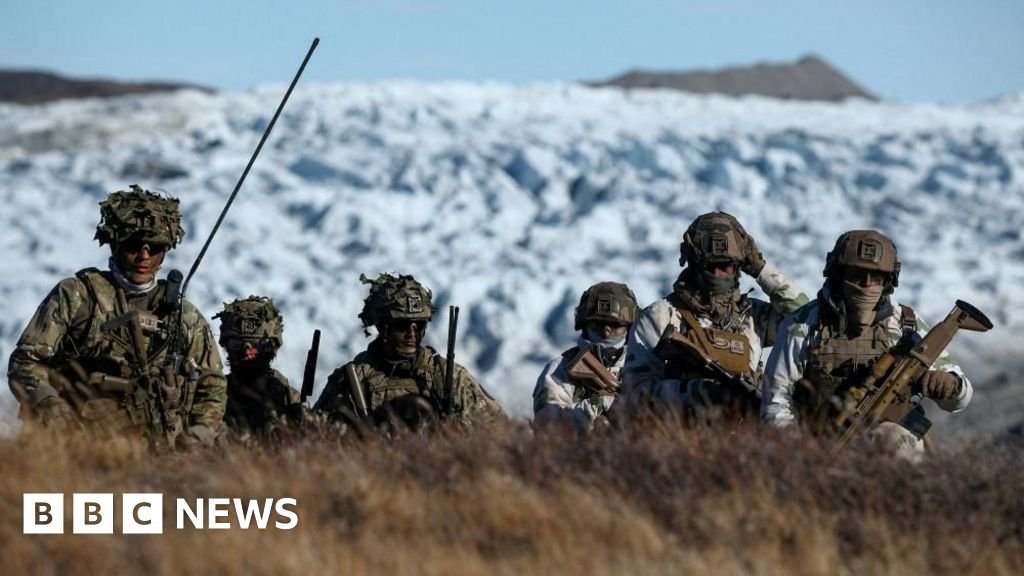
Despite its enormous size, Greenland has a scant population of about 58,000 people, primarily concentrated around Nuuk, the capital, and the western coastline. The territory lacks its own military, relying on Denmark for defense. Denmark possesses limited resources to defend such a large area, with much of it policed only by the Sirius Patrol, a specialized Danish unit that operates with dog sleds.
Nonetheless, Denmark has increased its defense spending in the Arctic region recently, recognizing the strategic importance of Greenland. With more than 100 US military personnel already stationed at the Pituffik facility in the northwestern part of Greenland, this base could serve as a logistical hub for any future operations.
Expert Opinions on Military Feasibility
Hans Tino Hansen, a Danish security expert, claims the Alaska-based 11th Airborne Division, which is equipped for Arctic operations, would likely lead any military initiative alongside air force and naval support. Justin Crump, a British Army reserve officer, concurs, stating that the US has overwhelming naval power and the capability to deploy sufficient troops to manage the operation effectively. He believes such a move could be executed swiftly with minimal resistance.
However, several defense analysts in the US convey that a military operation is improbable due to its severe consequences for transatlantic alliances. Mick Mulroy, a former Marine and CIA officer, emphasizes that launching an attack against a NATO ally would breach international law.
The Purchase of Greenland: Complicated Negotiations
While the US government is financially robust, acquiring Greenland is a convoluted issue. Both Greenland and Denmark have firmly stated that the territory is not for sale. Reports indicate that Secretary of State Marco Rubio mentioned the administration’s inclination towards purchasing the island, but any financial agreement would necessitate Congressional approval and international treaties.
Legal and Political Challenges
Even if Greenland were open to selling itself, establishing a transaction would be complex. It would involve acquiring funds through Congress and garnering two-thirds support from the Senate, creating challenges for what would likely become a contentious debate. The required European Union approval adds another layer of difficulty.
Public Sentiment in Greenland
Polls indicate a desire among Greenlanders for independence from Denmark, but they generally do not aspire to join the US. This presents an additional hurdle for any potential negotiations, with concerns that hefty expenditures on an ice-covered territory could turn public opinion against the current administration’s objectives.
Influence Campaigns: A Preferred Strategy?
Imran Bayoumi, an expert in geostrategy, suggests that rather than military action, an influence campaign to win favor among Greenlanders is a more realistic approach. Such a campaign could involve financial incentives aiming to support Greenland’s independence and cultivating ties between the US and a potentially independent Greenland.
Historical Precedents
These influence tactics are not new. The US has established similar arrangements with Pacific nations like Palau and the Marshall Islands, providing them with economic benefits in exchange for military access. However, this would not equate to ownership over Greenland’s mineral resources, which lie beneath its icy surface.
Reaching out to the people of Greenland rather than forcing territorial claims could foster goodwill, but Hansen cautions that any efforts to assert control will struggle against the prevailing sentiment for independence.
Conclusion
The question of Greenland’s future remains a complex web of military, political, and economic considerations. While the notion of acquiring Greenland might attract attention, the various avenues—whether through military action, purchasing, or influence—are fraught with challenges that underline the necessity of navigating intricate international relations responsibly.
- President Trump’s interest in acquiring Greenland raises significant military and diplomatic considerations.
- A military operation could be feasible but would likely face backlash and contradict international law.
- Purchasing Greenland presents considerable legal, political, and public sentiment hurdles.
- An influence campaign may be a more viable option for building relations with Greenland.