

The Incredible Discovery of Iron Age Artifacts in Norfolk
Recently, archaeologists made a remarkable find in Norfolk, unearthing two of the rarest Iron Age artifacts during an excavation. This discovery has been hailed as a “once-in-a-lifetime” event, showcasing the rich history of the region.
Astonishing Hoard Unearthed
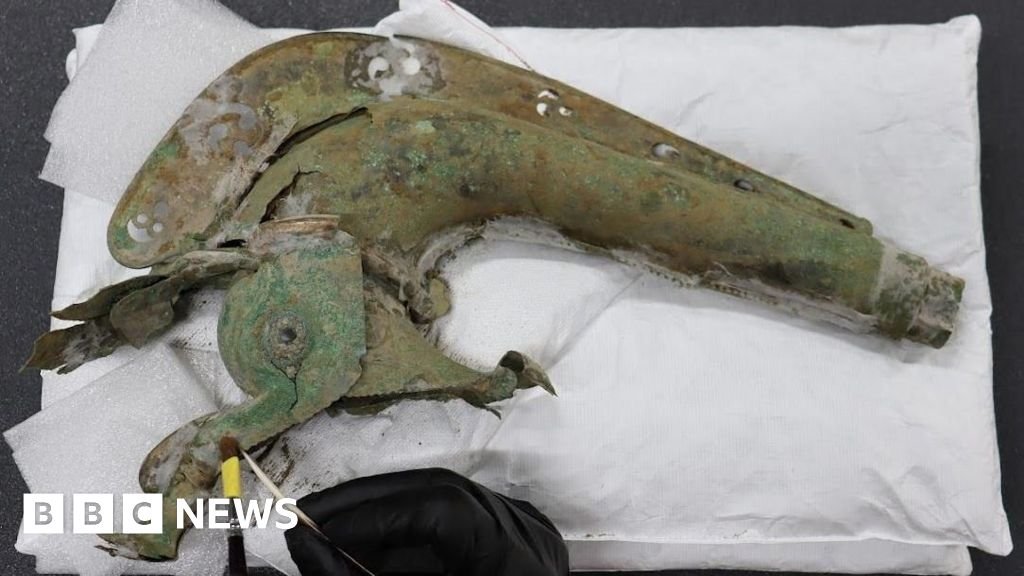
The excavation team from Pre-Construct Archaeology stumbled upon this treasure trove a few miles from Thetford, Norfolk, last year. Among the items discovered was the most complete carnyx ever found in Europe, alongside Britain’s first-ever boar’s head flag standard.
Rarity of the Findings
According to senior project officer Gary Trimble, carnyxes are incredibly rare, while a boar standard is even scarcer. The carnyx, which features a remarkable eye, captivated conservator Jonathan Carr, who remarked on its charm and historical significance.
The Context of the Discovery
Peters Crawley, the lead excavator, felt a deep intuition about the site’s significance even before digging commenced. “It felt like one of those special sites that you only come across occasionally,” he said.
The Role of Carnyx in Celtic Culture
The carnyx served as a war trumpet for various Celtic tribes across Europe, aimed at intimidating foes and guiding warriors in the heat of battle. The Iceni tribe, led by queen Boudica during her insurrection against the Romans, used these instruments during the tumultuous AD 60-61 period. The Romans often depicted these trumpets as trophies of war.
Fragility of the Artifacts
Carr mentioned the challenges of preserving the delicate items due to their construction from extremely brittle sheets of metal, which had suffered degradation over 2,000 years underground. This specific carnyx is not only among the three known in Britain but is also the most intact, featuring its pipe, mouthpiece, and bell.
The Boar’s Head Standard
The boar’s head flag standard, made from thin sheets of bronze, served as an emblem in battle, rallying soldiers under its banner. Dr. Fraser Hunter from National Museums Scotland highlighted the symbolic significance of the boar, known for its ferocity, making it an apt representation in combat.
Further Discoveries and Future Prospects
This hoard, thought to date back to around 50 BC to AD 50, also included five shield bosses along with an iron object whose purpose remains unknown. The items were meticulously extracted from the soil and scanned to accurately document their arrangement before beginning conservation efforts.
What’s Next for the Artifacts?
The discovery has been reported for further examination by the coroner, with an inquest to determine its status as treasure. The long-term fate of these artifacts is currently under review, with collaboration between Historic England, Pre-Construct Archaeology, Norfolk Museums Service, and the National Museum of Scotland for research and conservation.
Preserving Norfolk’s History
Dr. Tim Pestell, a senior curator at Norfolk Museums Service, noted that this finding serves as a strong reminder of the region’s Iron Age heritage, which continues to enchant people today. The Norfolk Carnyx Hoard opens new avenues for archaeologists to study these exceptional artifacts and narrate the story of their burial two millennia ago.
Conclusion
This incredible discovery of Iron Age artifacts not only sheds light on the past but also enriches our understanding of the cultural and historical landscape of Norfolk. Enthusiasts can look forward to more details, which will be showcased on BBC Two’s Digging for Britain.
Key Takeaways
- Discovery includes the most complete carnyx and a rare boar’s head standard.
- These artifacts highlight the cultural significance of Celtic warfare.
- The hoard dates back to approximately 50 BC to AD 50.
- Future research will further unravel the story behind these ancient finds.