

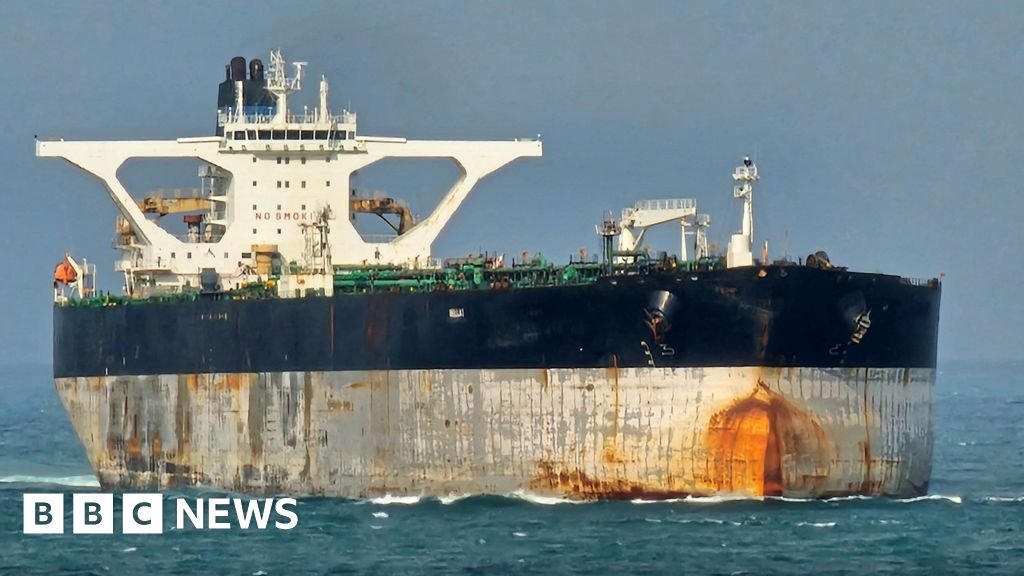
Russia Escalates Tensions with Vessel Escort Amid U.S. Sanctions
Recent reports indicate that Russia has dispatched a submarine and additional naval vessels to escort an oil tanker across the Atlantic, which is simultaneously being pursued by U.S. forces. This tanker, currently navigating the waters between Iceland and the British Isles, is accused of violating U.S. sanctions by shipping Iranian oil. Historically, it was known for transporting Venezuelan crude, but it is reported to be empty at this time. Previously named Bella 1, the vessel has been renamed Marinera and has undergone a reflagging from Guyanese to Russian.
The Context of U.S.-Russia Tensions
Former President Donald Trump announced last month that he would impose a “blockade” on sanctioned oil tankers entering or leaving Venezuela, a move that the Venezuelan government has labeled as “theft.” In the meantime, several U.S. military aircraft have been spotted over the North Atlantic, in proximity to where the Marinera is reportedly being pursued. Tracking platforms indicate that a U.S. air-to-air refueling tanker and several aircraft associated with U.S. Air Force Special Operations Command have been deployed for reconnaissance missions in the area.
Escalating Military Presence
On Tuesday, two U.S. officials confirmed to CBS News, in partnership with BBC, that Russia has indeed sent a submarine along with other naval assets to accompany the tanker. The U.S. Coast Guard previously attempted to board the vessel in the Caribbean, believing it was en route to Venezuela and had a warrant for its seizure due to alleged sanctions violations. However, the ship altered its course dramatically, leading to its current path towards Europe.
Russia’s Response
In response to the heightened military activity surrounding the Marinera, the Russian Foreign Ministry stated, “Our vessel is navigating in the international waters of the North Atlantic under the state flag of the Russian Federation and is fully compliant with international maritime law.” They expressed concern over what they termed “disproportionate attention” from U.S. and NATO military forces, asserting the ship’s peaceful status.
U.S. Military Strategy and Operations
Earlier reports suggested that American forces are gearing up to board the ship, with Washington favoring seizure over destruction. Footage released by Russia Today appears to showcase a U.S. Coast Guard vessel in the vicinity of the tanker, which is currently located approximately 300 km (186 miles) off the coast of Iceland, according to AIS data from Marine Traffic.
Operational Readiness
The U.S. military’s Southern Command has indicated via social media that they remain prepared to assist government agencies in addressing sanctioned vessels in the region. “Our sea services are vigilant, agile, and poised to track vessels of interest. When the call comes, we will be there,” they stated.
Legal and Geopolitical Implications
Before any U.S. military operation could proceed, it is expected that Washington would notify the UK, although the UK Ministry of Defence has refrained from commenting on the activities of other nations. U.S. officials suggest an operation similar to last month’s seizure of the Skipper, an oil tanker flagged to Guyana, is plausible. Under international law, vessels flying a country’s flag are typically under that nation’s protection. However, experts clarify that changing a ship’s name or flag does not fundamentally alter its status.
Challenges in Enforcement
As maritime analyst Dimitris Ampatzidis stated, “U.S. action is driven by the vessel’s underlying identity, not its surface markings.” Michelle Bockmann, another maritime intelligence expert, noted that reflagging to a Russian registry could complicate enforcement efforts by the U.S. According to the UN Convention on the Law of the Sea, stateless vessels could be boarded by authorities. By reflagging to Russia, the Marinera may avoid being subjected to this provision, a tactic not commonly seen except among illicitly operated tankers.
A Broader Trend in Maritime Maneuvers
The situation surrounding the oil tanker unfolds amid increasing tensions following the U.S. arrest of Venezuela’s Nicolás Maduro in Caracas under suspicion of drug and weapon offenses. Since Maduro’s capture, investigators have identified three U.S.-sanctioned tankers that have switched to a Russian registry, including the Marinera itself. This trend is notably alarming; BBC Verify has tracked a total of 19 U.S.-sanctioned oil tankers transitioning to a Russian registry since the Skipper seizure.
Conclusion
The deployment of Russian naval forces to escort the Marinera highlights increasing geopolitical tensions. With accusations of sanction violations and shifting allegiances among tankers, the situation continues to evolve. Both nations are on high alert, raising questions about the implications for international maritime law and security.
- Russia has sent a submarine to escort the Marinera, accused of shipping Iranian oil.
- The U.S. has increased military presence near the tanker amid sanctions violations claims.
- Reflagging to a Russian registry complicates potential U.S. enforcement actions.
- The geopolitical climate remains tense, especially following the U.S. arrest of Nicolás Maduro.