

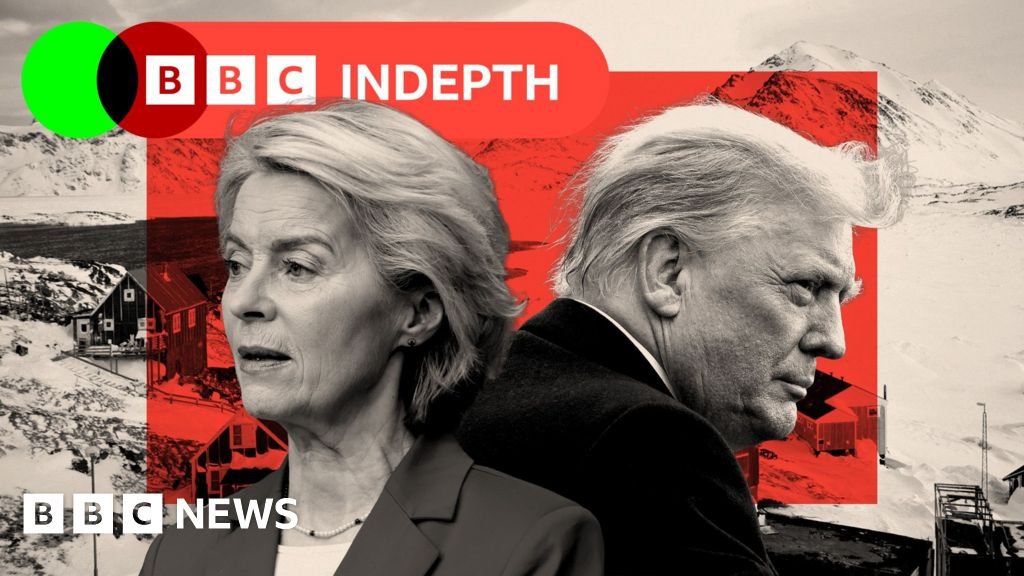
The Tensions Surrounding Greenland and Ukraine: A Diplomatic Balancing Act
In a notable gathering today in Paris, a group known as the Coalition of the Willing, composed primarily of European leaders, came together with representatives from the administration of former President Donald Trump to advance discussions on a lasting peace agreement for Ukraine. As Ukrainian President Volodymyr Zelensky asserted that a plan to conclude the conflict with Russia is nearly finalized, the atmosphere in the room was palpably tense. Leaders were keen to maintain U.S. support, especially amidst rising complications surrounding Greenland.
Political Underpinnings of the Paris Meeting
Recent events, including controversial U.S. actions in Venezuela and Trump’s insistence on Greenland for national security reasons, loomed large over the meeting. Greenland, an autonomous territory of Denmark, has become a flashpoint as the pressures between Washington and Copenhagen increase. Danish Prime Minister Mette Frederiksen faced pressure from her peers not to provoke the U.S. regarding Greenland, fearing repercussions on support for Ukraine.
Statements of Support and Division
To address the rising tensions, leaders at the meeting issued a joint statement emphasizing that Greenland’s status is tied to NATO, advocating for collective security in the Arctic. While Greenland’s Prime Minister, Jens Frederik Nielsen, welcomed the statement, critics pointed out its lack of unity, noting that only a small group signed it. Camille Grande of the European Council on Foreign Relations expressed that a more unified EU stance could have sent a strong message to the U.S.
Irony in International Relations
The meeting in France was rife with irony. European leaders were seeking to safeguard Ukraine’s sovereignty from external aggression (Russia), even as the U.S. had recently militarily intervened in Venezuela while simultaneously threatening Danish sovereignty. This complicates Europe’s position, despite both Denmark and the U.S. being NATO allies.
Implications for NATO and the EU
The possibility of Trump asserting control over Greenland raises concerns about NATO’s integrity and poses serious implications for the EU as a whole. Previous comments from Trump about acquiring Greenland have not been taken lightly; he has pointed to its strategic importance given the presence of Russian and Chinese ships in the Arctic. Denmark firmly rejects any notion of U.S. oversight, pledging significant investments in Greenland’s defense.
The European Response
Denmark’s neighbors quickly voiced support for its sovereignty in light of Trump’s remarks, while the EU’s major powers initially hesitated to engage directly with the issue. The UK’s Prime Minister and Germany’s Chancellor eventually recognized that decisions about Greenland belong solely to Denmark and Greenland. However, stark criticism of the U.S. remains noticeably absent.
Managing a Complex Relationship
Trump’s tough negotiation style has created anxiety among European allies. Rather than confronting him directly, many have opted to navigate the difficult waters of diplomacy, attempting to preserve bilateral relationships. The convoluted dynamics of global politics have left Europe appearing sidelined, anxious that any misstep could have severe repercussions.
Challenges in EU Unity
In its attempts to solidify its role on the world stage, the EU has faced challenges, particularly regarding financial support for Ukraine. The bloc has often deferred to U.S. interests, notably in trade negotiations and military strategies, reflecting an ongoing struggle in asserting independence from American influence.
Reassessing European Security
As discussions continue, the question of how European nations can present a united front becomes ever more pressing. The rising tensions over Greenland, compounded by splits within the EU concerning the Trump administration, indicate a looming crisis for both NATO and European cohesion.
Conclusion
The geopolitical chess game surrounding Greenland and Ukraine highlights the intricate web of alliances and the pressing need for European nations to navigate these challenges collaboratively. As the global landscape continues to shift, Europe’s ability to assert its sovereignty and maintain unity will be critical.
- The Coalition of the Willing meets in Paris to discuss Ukraine’s peace strategy amid tensions over Greenland.
- European leaders emphasize the importance of collective security in the Arctic, but face internal divisions.
- Trump’s previous comments regarding Greenland raise concerns over NATO’s integrity and the EU’s diplomatic position.
- The fragility of EU unity is underscored by differing attitudes toward U.S. foreign policy.