

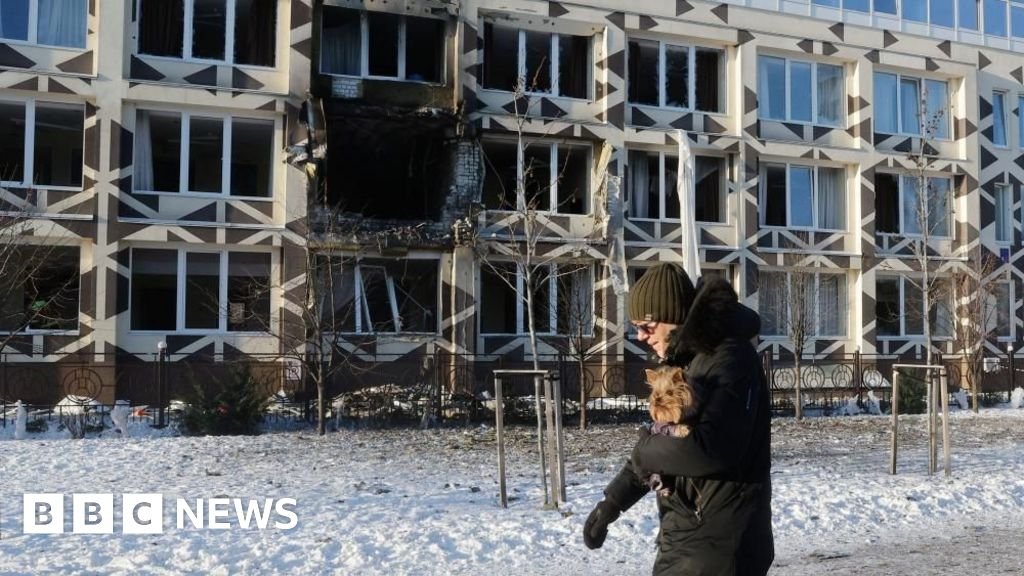
Increased Attacks and Security Efforts Amid Ukraine Conflict
Recent developments in the ongoing conflict between Russia and Ukraine have seen a significant uptick in attacks, particularly targeting Ukraine’s energy infrastructure. French President Emmanuel Macron is currently facilitating discussions with Ukraine’s President Volodymyr Zelensky, along with other key allies, as they work to establish security assurances for Kyiv in the event of a potential ceasefire with Russia.
The Summit in Paris
Notable leaders and officials from over 30 nations, part of what is referred to as the Coalition of the Willing, are convening for this important meeting. This gathering includes American intermediaries in the peace talks, Steve Witkoff and Jared Kushner, the son-in-law of former President Donald Trump. Zelensky recently met with Trump and indicated that the framework for ending the conflict is approximately 90% finalized.
Pending Agreements and Territorial Concessions
However, the remaining 10% of details still needs resolution, particularly regarding territorial concessions that Ukraine might be required to accept. Currently, Russia exerts control over around 75% of the Donetsk region and nearly all of the adjacent Luhansk region, together encompassing the critical industrial area known as Donbas.
Russia’s Relentless Campaign
Since its full-scale invasion in February 2022, Russia has made gradual advances and shows little willingness to compromise on its goal of fully annexing the Donbas region. In fact, Russia has intensified its offensive operations, especially aimed at crippling Ukraine’s energy supplies during the severe winter months.
In response, Ukraine has conducted counterattacks, utilizing drones to strike back; a recent targeting was an oil depot located in the Lipetsk region of western Russia.
Focus of the Paris Meeting
The leaders at the Paris summit, including UK Prime Minister Keir Starmer and NATO Secretary General Mark Rutte, are focused on finalizing several key matters. These include establishing a multinational force to ensure Ukraine’s security following any peace agreement, determining the types of security guarantees that will be offered to Ukraine if Russia reinvades, and supporting both Ukraine’s military and its economy.
The “Backstop” Discussions
For several months, European allies of Ukraine have been particularly interested in securing a commitment from the United States to respond to any Russian breaches of a peace accord. After discussions in Florida with Trump, Zelensky suggested that Washington has proposed 15 years of security guarantees, although a timeline for these assurances remains unspecified.
Current Geopolitical Tensions
The discussions in Paris are also taking place against a backdrop of conflict related to recent American military actions in Venezuela, where elite U.S. forces aimed to capture President Nicolás Maduro on charges related to drug trafficking. Following this raid, Trump asserted that the U.S. desired to “run” Venezuela for an indefinite period, evoking concerns about a return to a previous paradigm of U.S. dominance in the Western Hemisphere.
Adding to the tension, Trump has made remarks implying an interest in annexing Greenland, a semi-autonomous territory of Denmark, a NATO ally. This statement prompted a robust response from Danish Prime Minister Mette Frederiksen, who suggested that such a move could jeopardize the transatlantic alliance.
Conclusion
As the Paris summit progresses, President Macron is keen to navigate these challenging geopolitical waters without letting issues like Greenland overshadow the primary focus of ensuring security and stability for Ukraine amidst its ongoing struggles.
Key Takeaways
- Heightened attacks by Russia on Ukraine’s energy sector during winter.
- International summit in Paris aimed at solidifying security guarantees for Ukraine.
- Pending territorial concessions remain a key sticking point in peace discussions.
- Ongoing geopolitical tensions complicate the dialogue surrounding Ukraine’s future.