

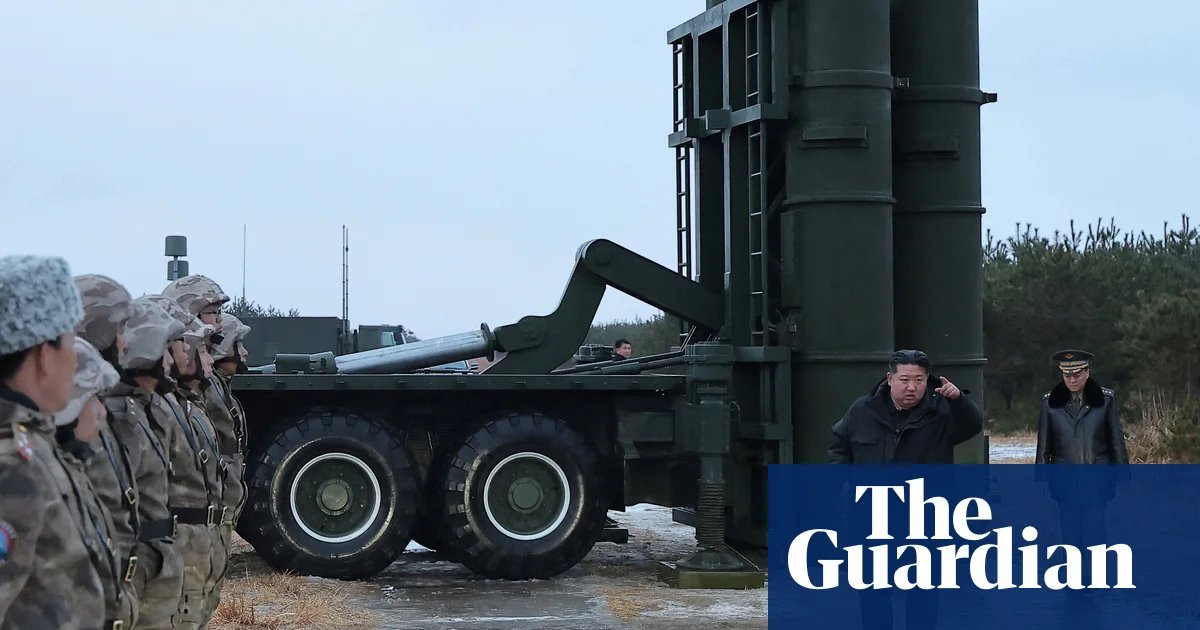
Nuclear Tensions Rise as North Korea Launches Ballistic Missiles
In a provocative display of military capability, North Korea launched several ballistic missiles into the sea on Sunday, coinciding with a significant diplomatic moment as South Korea’s president prepared for talks in China aimed at addressing North Korea’s nuclear ambitions.
Timeline of Events
On Sunday morning at around 7:50 AM local time, South Korea’s joint chiefs of staff reported the detection of multiple missile launches from the North Korean capital region. The missiles reportedly traveled approximately 560 miles (900 km), with South Korean and U.S. officials currently assessing the details of the launches.
In light of the aggressive action, South Korea asserted its preparedness to respond to any provocations, maintaining close communication with U.S. and Japanese authorities regarding the missile activity.
International Reactions
Following the launches, South Korea’s national security council held an emergency meeting. Official statements condemned the missile tests as a challenge to international law, specifically citing violations of UN Security Council resolutions.
Meanwhile, Japan’s defense ministry confirmed it had also detected ballistic missile activity, noting that some missiles reached altitudes of 50,000 meters and traveled varying distances of 560 and 590 miles. Japan’s defense minister, Shinjiro Koizumi, labeled North Korea’s actions as a direct threat to both national and global stability.
“North Korea’s nuclear and missile development threatens the peace and stability of our country and the international society, and is absolutely intolerable,” — Shinjiro Koizumi
Historical Context and Underlying Fears
This marks North Korea’s first ballistic missile launch since November of the previous year, which followed the U.S. president’s approval of South Korea’s nuclear submarine development plans. Some analysts suggest that international military events, such as a recent U.S. operation in Venezuela, may have influenced Pyongyang’s decision to execute this launch.
For decades, North Korea has maintained that its nuclear and missile programs serve as essential deterrents against perceived threats from the U.S., despite assurances from Washington that it does not seek regime change in Pyongyang. According to analyst Hong Min from the Korea Institute for National Unification, there are concerns within North Korea that the U.S. could launch a sudden, precision strike, jeopardizing the regime’s survival.
Implications for Diplomacy
The missile tests came just hours before South Korean President Lee Jae Myung was scheduled to leave for Beijing to meet with Chinese President Xi Jinping. This meeting is expected to address North Korea’s provocations, leveraging China’s influence as its primary economic ally to foster better relations with Pyongyang.
In the weeks to come, North Korea will convene a pivotal congress of its ruling party—the first in five years—where economic strategies and defense policies will likely take center stage. Recently, Kim Jong-un ordered an expansion and modernization of the country’s missile production capabilities, aiming to increase production capacity by an impressive 250%, as reported by state media.
Conclusion
With escalating tensions surrounding North Korea’s missile tests, the dynamics in the region are poised for rapid changes. The upcoming diplomatic discussions in China could play a pivotal role in shaping future interactions between North Korea and its neighboring countries, as the world watches closely.
- North Korea launched ballistic missiles on Sunday, just before diplomatic talks in China.
- South Korea and the U.S. are closely monitoring the implications of this provocative action.
- Japan condemned the launches, seeing them as a threat to regional stability.
- Upcoming North Korean party congress may influence its policy direction significantly.