

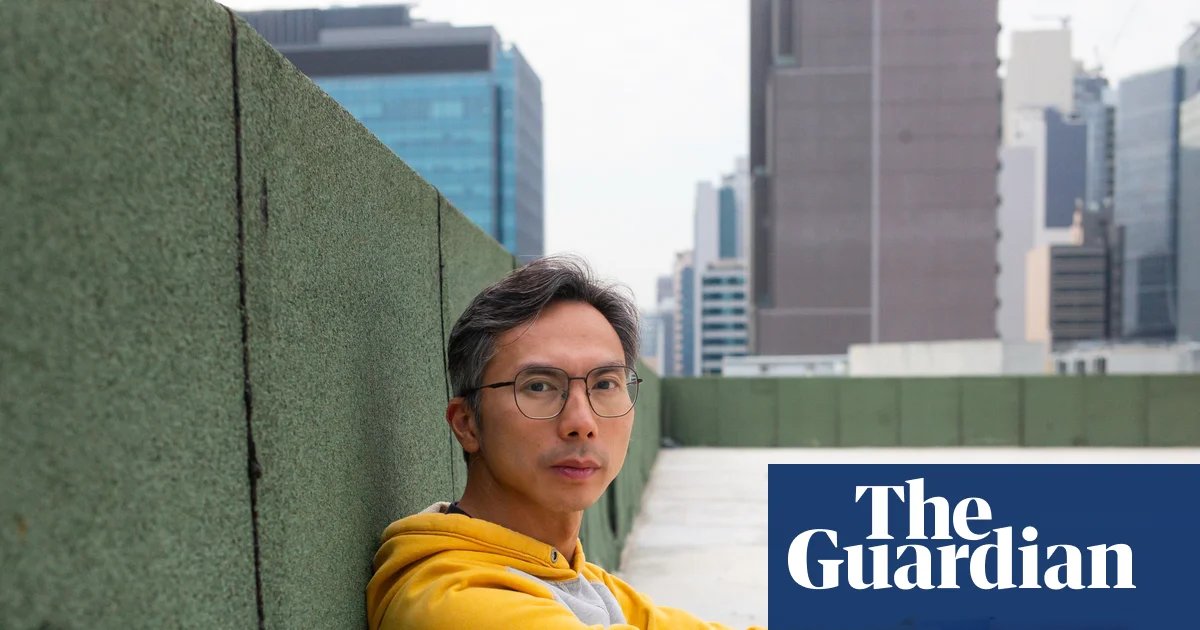
Voices of Dissent: Kiwi Chow’s Stand Against Silence in Hong Kong
In the heart of Hong Kong, where criticism of the government and the ruling Chinese Communist Party (CCP) has largely been silenced, filmmaker Kiwi Chow emerges as a courageous voice. At 46, Chow audaciously confronts the oppressive atmosphere engulfing the region, stating, “The Chinese Communist Party’s practice is to try and destroy history and truth. It’s ridiculous that I can still live in Hong Kong without being in jail.”
In an environment where wearing a “seditious” T-shirt can result in imprisonment, Chow’s surprise at his continued freedom is understandable.
Chow’s Artistic Journey
Chow is widely recognized for his collaborative work on the 2015 film Ten Years, a dystopian anthology envisioning a future Hong Kong increasingly influenced by the CCP. His most recent project, Revolution of Our Times, an award-winning documentary released in 2021, sheds light on the city’s pro-democracy protests.
His newest film, Deadline, explores the harrowing pressures high school students encounter amid a highly competitive academic environment. Chow emphasizes that while these issues have plagued Hong Kong for years, they have intensified under the newly imposed national security regime.
Despite enjoying some success in his career and residing in Hong Kong, Chow faces escalating challenges due to his outspoken political beliefs. On December 12, Hong Kong’s film censorship authority denied approval for Deadline to be released, citing national security concerns. Upon receiving the news, Chow expressed his decision not to appeal, deeming it “futile.”
Facing Injustice with Resolve
Chow stated, “This film is the hard work and dedication of so many people – the investors, the actors, and the crew. It is heartbreaking to all of us. When confronted with injustice and absurdity, we feel helpless, and anger seems to be inevitable… In response to this unfair judgment, my reaction is: I will stick to my filming path.”
Cinema curator Shelly Kraicer remarked on Chow’s boldness, observing how he openly discusses the political constraints he faces. Many of Chow’s films delve into the social upheavals shaping his homeland. The tragic aftermath of the Wang Fuk Court fire, which claimed at least 160 lives last November, further underscores the state’s tightening grip on dissent.
Shortly after the tragedy, Hong Kong held “patriots only” legislative council elections, allowing only government-vetted candidates to participate. With citizens still reeling from the disaster and questioning government accountability, many chose to abstain from voting, resulting in a historic low turnout of just 31.9%.
Chow was among those who opted not to vote and has been vocal in criticizing the government’s response to the disaster. He highlighted issues such as collusion between officials and businesses, poor construction standards, and pervasive corruption, questioning, “How long must Hong Kong endure this?”
The Aftermath of the Fire
The construction company involved in renovations at the site of the fire has not publicly commented, and the consultancy responsible for the project reportedly ceased operations shortly thereafter. Arrests of directors from both companies have raised more questions about accountability.
A spokesperson from the Hong Kong government assured that authorities are committed to investigating the fire’s cause and have arrested several individuals on suspicion of manslaughter.
This incident marked a significant challenge to Beijing’s control in Hong Kong since the pro-democracy protests of 2019-20. Chow’s defiance became evident in 2021 with the release of Revolution of Our Times, a documentary chronicling the protests that premiered at the Cannes Film Festival and took its name from a banned protest slogan.
Beyond Borders: The Impact of Censorship
Chow’s latest film, featuring renowned Hong Kong actor Anthony Wong, faces an effective ban from public screenings. Although Deadline was filmed in Taiwan and is not overtly political, its examination of elite academic pressures makes it relevant across East Asia. Yet, Chow suspects that the authorities aim to target his personal career rather than outright arrest him. “They don’t want to arrest me, but they want to destroy my creative career,” he remarked.
The Hong Kong Office for Film, Newspaper and Article Administration declined to comment on the approval process for specific films. Kraicer noted that the authorities appear to prioritize controlling what films are exhibited rather than suppressing filmmakers themselves.
Deadline grapples with themes prevalent throughout East Asia, yet Chow believes that the pressure faced by educators and students in Hong Kong is unparalleled—especially with national security being integrated into the curriculum. He expresses concerns over the distortion of history and truth in education, illustrating a troubling reality where teachers and students remain silenced.
The Ongoing Challenge
Following the Wang Fuk Court fire, several individuals were arrested for alleged national security offenses, including a student who initiated an online petition for government accountability. Additionally, on December 15, a prominent pro-democracy activist, Jimmy Lai, was found guilty of national security violations—the most significant case since the law’s enactment in 2020.
Yet, Chow remains undeterred. He believes the authorities are unlikely to arrest him, fearing it would draw attention to his work. While recognizing the possibility, he prefers to use his voice while still able.
“Even if we left Hong Kong, the fear would linger,” he reflects, alluding to Beijing’s tendency to target critics abroad. Instead, he chooses to remain rooted in Hong Kong, saying, “I want to stay in Hong Kong and get used to living with fear.”
- Filmmaker Kiwi Chow is a rare voice of dissent in Hong Kong, speaking against the oppressive regime.
- His latest project, Deadline, faces censorship amid heightened government scrutiny.
- Chow critiques the systemic corruption and academic pressures in Hong Kong’s education system.
- Despite the risks, he remains committed to his work and to voicing the truth.