

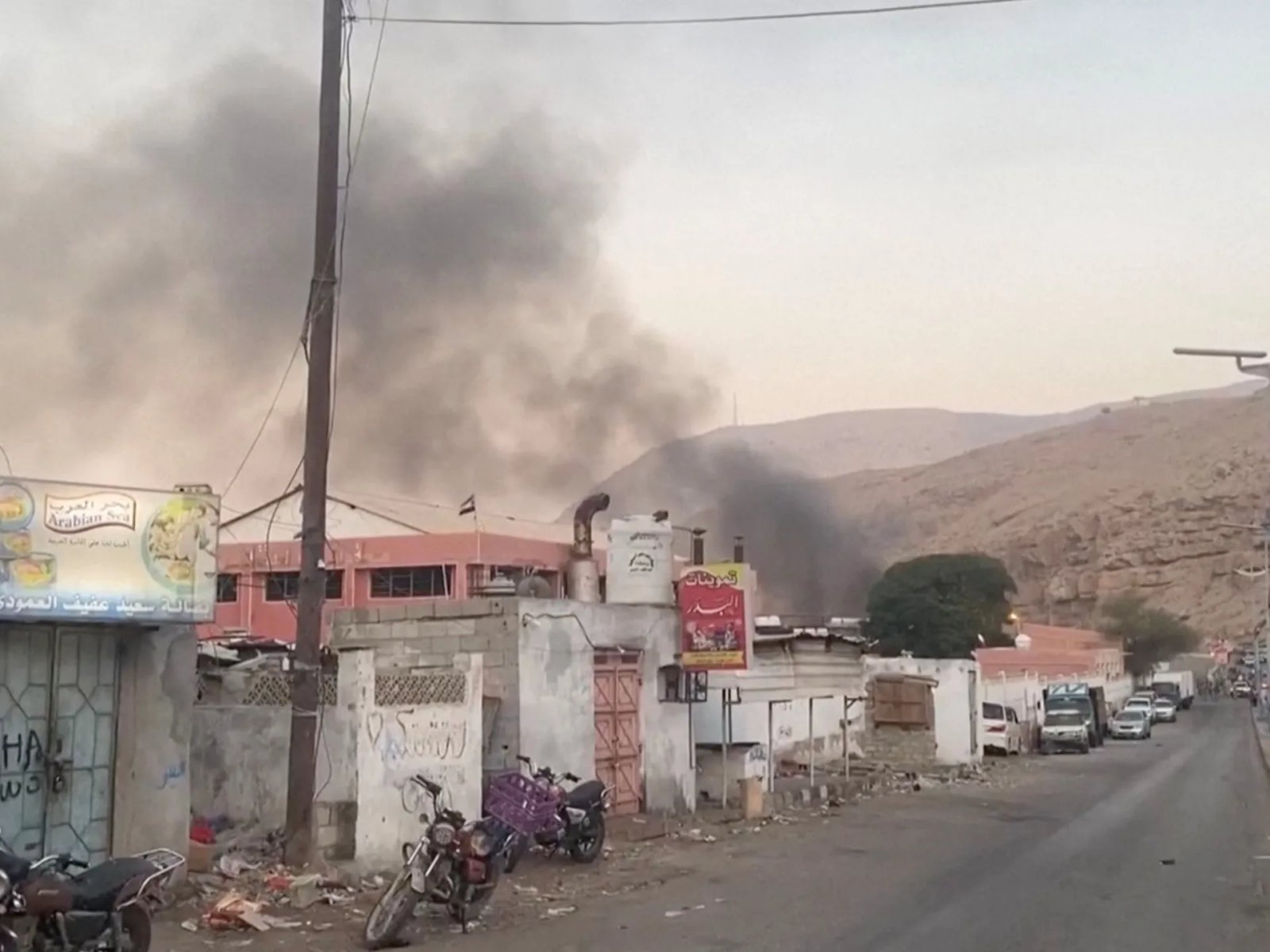
Continued Tensions in Yemen amidst STC Moves
The situation in Yemen remains tense, particularly with the Southern Transitional Council (STC) making significant military maneuvers in the southern regions. This article delves into recent developments, including warnings from the head of the Presidential Leadership Council and the implications of STC’s actions for the region’s stability.
Warnings from Yemeni Leadership
Rashad al-Alimi, the leader of the internationally recognized Presidential Leadership Council, has expressed serious concerns regarding the unilateral military actions taken by the STC. He cautioned that any further advances by them in the provinces of Hadramout and al-Mahra could provoke serious repercussions.
Recent Military Actions
This warning comes in light of a surprise offensive by STC forces in December, which resulted in their seizure of key resource-rich areas. In response, Riyadh has accused the United Arab Emirates (UAE) of inciting the STC’s actions, claiming that their presence in provinces adjacent to Saudi Arabia poses a potential threat. However, the UAE denied these allegations and reiterated its commitment to supporting Saudi security.
STC’s Position
Despite the warnings, the STC has firmly rejected al-Alimi’s authority, maintaining that its forces will remain in the territories that both the Yemeni government and Saudi Arabia are keen for them to leave. Recently, the group announced plans to deploy additional forces to strengthen their hold in Hadramout, which could further complicate the situation.
Official Responses and Statements
Neither the Yemeni government nor Saudi Arabia has publicly responded to the STC’s latest announcements. Mohammed al-Naqeeb, a spokesperson for the STC, confirmed in a video that their units would persist in operating within the seized areas but would coordinate with “Homeland Shield” forces associated with the Yemeni government and the Saudi-led coalition.
Limited Withdrawal Requests
Salem al-Khanbashi, the governor of Hadramout, indicated that there has been little compliance from the STC regarding calls for withdrawal. He stressed the need for the separatists to retreat to their original positions to prevent further bloodshed, emphasizing that defiance could lead to violence in the region.
Impact of Recent Airstrikes
This week, the Saudi-led coalition conducted airstrikes on military vehicles and weapons that arrived at the port of Mukalla, which is currently under STC control. Saudi Arabia declared its national security as a “red line” and accused the UAE of supplying military equipment to the STC while they expand their territory in crucial areas.
International Reactions
The UAE’s Ministry of Foreign Affairs has dismissed these accusations as unfounded, but they did announce the conclusion of their remaining counterterrorism missions in Yemen. Additionally, the European Union has voiced concerns regarding the developments in Hadramout and al-Mahra, warning that they may lead to renewed instability in the Gulf region and calling for de-escalation while reiterating support for Yemen’s unity and governing leadership.
Conclusion
The ongoing activities of the STC and the resultant tensions highlight the fragile nature of the situation in Yemen. As local and international stakeholders seek resolution, the potential for conflict remains prominent. Continuous diplomatic efforts are essential to safeguard the region’s stability.
Key Takeaways
- Al-Alimi warns against STC’s military advances in Hadramout and al-Mahra.
- STC maintains control over key areas despite government demands for withdrawal.
- Saudi Arabia conducts airstrikes, accusing UAE of supporting STC.
- The European Union calls for de-escalation and emphasizes Yemen’s need for unity.