

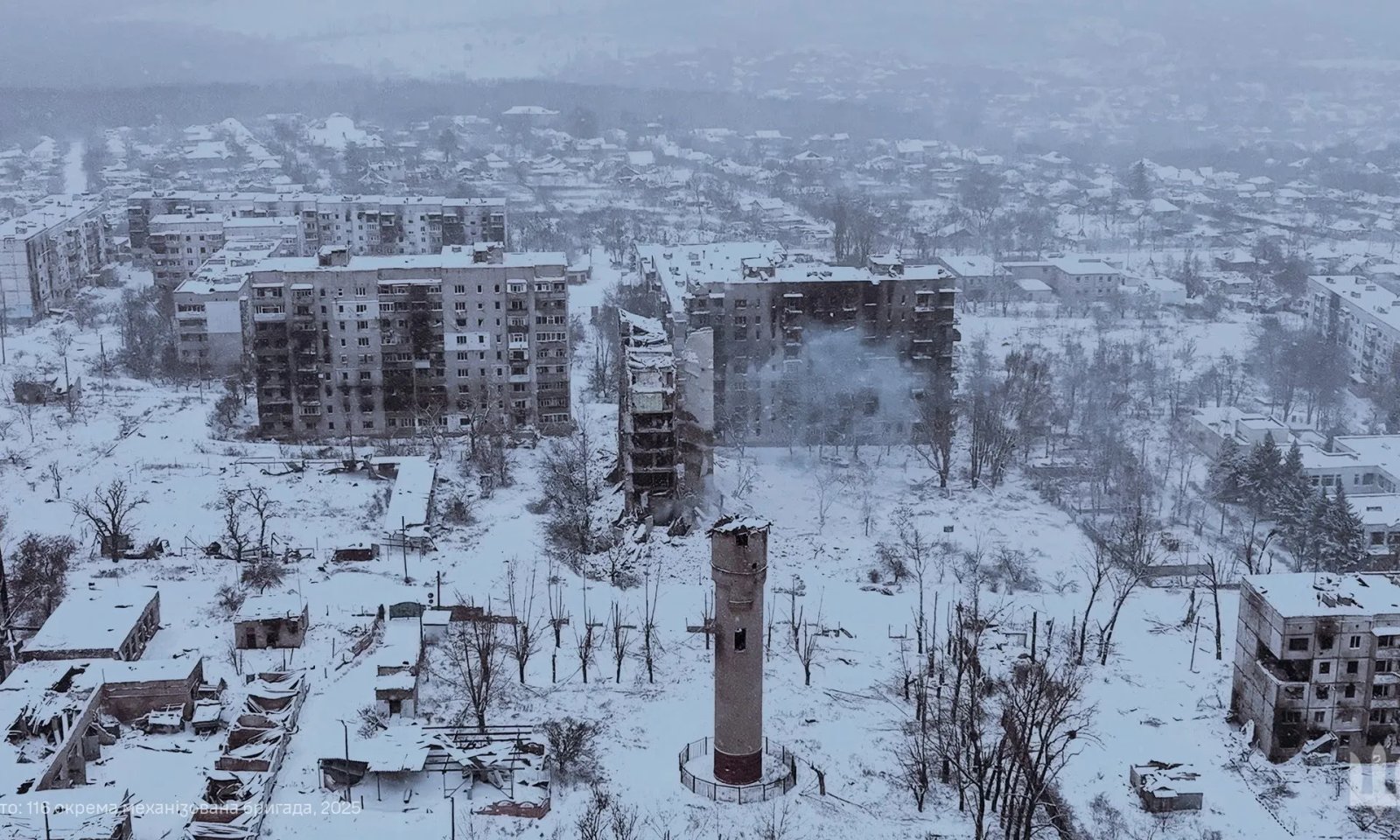
Key Updates from Day 1,406 of Russia’s War on Ukraine
As the conflict between Russia and Ukraine continues, significant developments have emerged. This article highlights the latest events, including military actions, diplomatic maneuvers, and the humanitarian situation on the ground.
Military Actions
On December 31, Russian forces targeted Kostiantynivka in Ukraine’s Donetsk region, resulting in the death of one individual. This attack followed another incident in Druzhkivka, which claimed a life and injured four others, according to reports. The Ukrainian navy also reported that Russian forces launched multiple assaults on the Black Sea ports of Pivdennyi and Chornomorsk, striking Panama-flagged civilian vessels while they were preparing to load wheat.
Ukrainian Deputy Prime Minister Oleksii Kuleba noted that oil storage tanks were damaged in these port attacks. In response to escalating threats, officials in the Chernihiv region mandated the evacuation of residents from 14 villages across four districts, impacting around 300 people in areas that experience daily shelling.
Moreover, Ukrainian Deputy Minister of Energy Olha Yukhymchuk stated that 75,000 households in Chernihiv are without electricity due to strikes on energy infrastructure. Similar outages have been reported in Kharkiv and Sumy regions. Repair efforts have successfully restored transmission lines near the Zaporizhzhia nuclear power plant, ensuring stable power supply.
In the eastern part of Ukraine, the Russian Ministry of Defence claimed control over two additional settlements: Lukianivske in Zaporizhia and Bohuslavka in Kharkiv. On the flip side, Ukrainian drone strikes in Russia’s Belgorod region resulted in one death and injuries to four individuals, while a separate drone attack reportedly damaged infrastructure in Tuapse.
Impact of Alleged Drone Attack on Putin’s Residence
Kremlin spokesperson Dmitry Peskov indicated that Russia plans to adopt a more stringent stance in negotiations to end the war following an alleged drone assault on President Vladimir Putin’s residence. Peskov accused Ukraine of attempting to sabotage peace talks, a claim Ukraine firmly denies, labeling it an excuse for further aggression.
Ukrainian Foreign Minister Andrii Sybiha remarked that Russia has yet to provide credible proof of its allegations. He asserted, “There’s no evidence; no such attack occurred.” President Volodymyr Zelenskyy criticized nations, including India and the UAE, for their reactions to the alleged incident, calling them “confusing and unpleasant.”
China emphasized that “dialogue and negotiation” are essential for resolving the crisis, urging all parties to avoid escalating tensions. Analysts from the Institute for the Study of War noted that the circumstances surrounding the supposed attack do not correlate with typical patterns observed in Ukrainian operations within Russia.
Diplomatic Developments
President Zelenskyy announced upcoming meetings with the Coalition of the Willing, with national security advisers set to convene in Ukraine on January 3, followed by a leaders’ meeting in France on January 6. Discussions about potential U.S. troop presence in Ukraine are ongoing, with Zelenskyy expressing hope for robust security guarantees.
Polish Prime Minister Donald Tusk conveyed optimism about the prospect of peace, voicing that recent developments provide grounds for hope that the conflict could end relatively soon, albeit acknowledging that it remains uncertain. Security guarantees from the U.S. are viewed as a catalyst for potential resolutions, with the caveat that concessions on territorial matters may be necessary.
In a notable move, the U.S. lifted sanctions on Alexandra Buriko, former CFO of Sberbank, who had sought legal recourse after resigning from the bank shortly after the onset of the invasion.
Military Support for Ukraine
Romania’s Ministry of Foreign Affairs declared a commitment of 50 million euros to support a European initiative aimed at acquiring weapons from U.S. manufacturers for Ukraine. Meanwhile, Belarus showcased the deployment of Russian nuclear-capable hypersonic missiles, a strategic development aimed at enhancing Moscow’s strike capabilities in Europe.
Conclusion
The ongoing conflict in Ukraine remains complex, with military actions, political maneuvers, and diplomatic conversations unfolding continuously. As both sides navigate this challenging environment, the situation remains fluid, with potential implications for the region and beyond.
Key Takeaways
- Russian shelling continues to cause casualties in Ukraine’s Donetsk region.
- Mandatory evacuations have been ordered for residents in border areas experiencing daily attacks.
- Diplomatic discussions are planned for early January, aiming to explore peace talks and security guarantees.
- Romania has committed resources to support military assistance for Ukraine.