

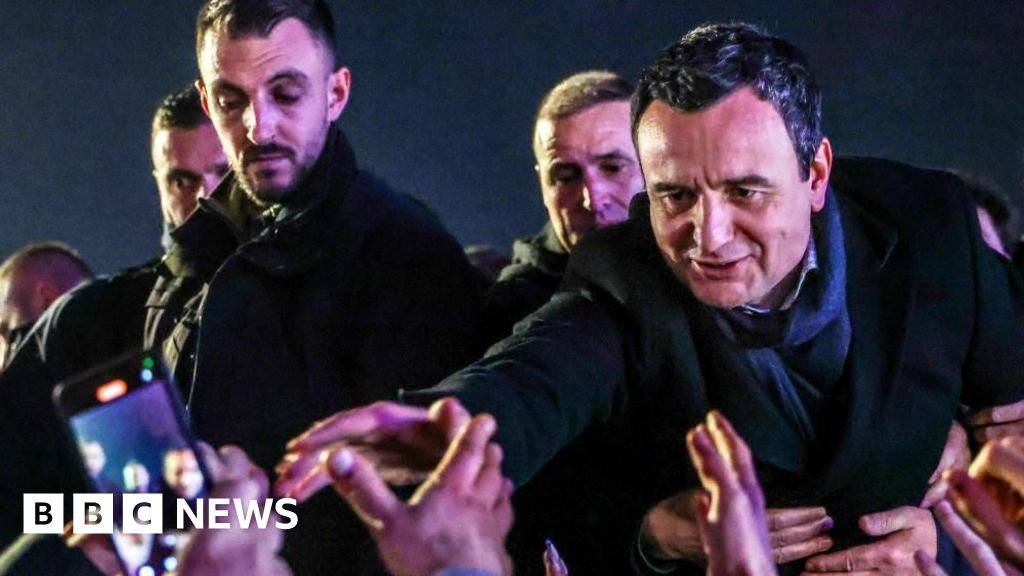
Vetevendosje Secures Major Win in Kosovo’s Elections
The recent parliamentary elections in Kosovo have seen a remarkable victory for the Vetevendosje party, reflecting a clear demand from voters for continued leadership. With around 90% of votes counted, Vetevendosje, which translates to “self-determination,” has captured a stunning 50.8% of the votes. This victory paves the way for Albin Kurti, the party leader, to secure a third consecutive term. In contrast, the main opposition parties, including the Democratic Party of Kosovo (PDK) and the Democratic League of Kosovo (LDK), garnered 20.98% and 13.89% of the votes, respectively.
A New Chapter in Kosovo’s Political Landscape
Earlier this year, Vetevendosje faced challenges after winning elections in February without an outright majority, resulting in a prolonged period without a functioning government. This second parliamentary election raised an important question: would voters hold Kurti accountable for the political standoff or would they favor the opposition parties who rejected the possibility of a coalition with his left-wing movement?
The electorate’s response was decisive. While Vetevendosje’s vote share may not secure a majority of seats outright, it is expected that Kurti will be able to garner support from the MPs representing ethnic minority parties, who occupy 20 of the 120 seats in the National Assembly.
Significance of the Victory
This marks the fourth consecutive electoral win for Vetevendosje, reinforcing the party’s position in Kosovo’s political environment. Kurti expressed his belief that this is “the greatest victory in the history of the country” and voiced expectations for a cooperative approach from opposition parties, rather than obstruction.
Arben Gashi, the leader of the LDK, hinted at possible collaboration, stating on social media, “When voters speak, the result cannot be ignored. Reflection and responsible action are required.”
Implications for Governance and International Relations
With a pressing need for a functioning government, Kosovo has been deprived of crucial European Union funding and potential agreements with the World Bank, amounting to more than €1 billion. Furthermore, Kurti will need to focus on mending relations with key international allies such as the EU and the US. His previous confrontational stance against institutions serving Kosovo’s Serbian minority has heightened tensions and drawn criticism from Brussels and Washington.
While the EU has lifted punitive measures imposed earlier this year, it will be closely observing Kurti’s approach to future dialogues with Serbia, hoping for a more practical stance over his typically rigid viewpoint. Given the current frigid relations between Kurti and Serbian President Aleksandar Vucic, this remains uncertain.
Public Sentiment and Political Context
The significant endorsement of a polarizing figure like Kurti signals voters’ disillusionment with alternative options. Political parties affiliated with the Kosovo Liberation Army have dominated the government since Kosovo’s declaration of independence in 2008, yet they have largely failed to fulfill promises of economic progress.
Analyst Artan Muhaxhiri pointed out Vetevendosje’s numerous constitutional violations, economic stagnation, and strained alliances during its years in power. Nevertheless, he concluded that, despite these issues, many citizens view the opposition as potentially more detrimental.
Conclusion
The recent electoral success of the Vetevendosje party showcases a significant political shift in Kosovo, reflecting public sentiment towards continued leadership under Albin Kurti. As the new government navigates fresh challenges, including economic growth and international relations, the implications of this victory could shape the future of Kosovo.
Key Takeaways
- Vetevendosje won 50.8% of the votes in the latest parliamentary elections.
- The result marks a fourth consecutive electoral victory for Albin Kurti.
- Coalition-building will be essential for effective governance following the election.
- Strained international relations and local economic issues will be key challenges for the new government.