

China’s Military Maneuvers Around Taiwan: A Warning in Disguise
On Monday, the first day of extensive military exercises surrounding Taiwan showcased alarming AI-generated imagery in a propaganda video released by China. From eagles morphing into attack drones to wolves transforming into robotic soldiers ravaging a city, the video projects a disturbing narrative of a potential invasion. This depiction reflects Beijing’s view of Taiwan as an integral part of its territory.
Simona Grano, head of research on China-Taiwan relations at the University of Zurich’s Institute of Asian and Oriental Studies, suggested that the depiction of animals signifies the instinctive nature of military operations, whereas machines indicate precision. “The implication is that this is not merely a political decision but a natural and inevitable process,” she noted.
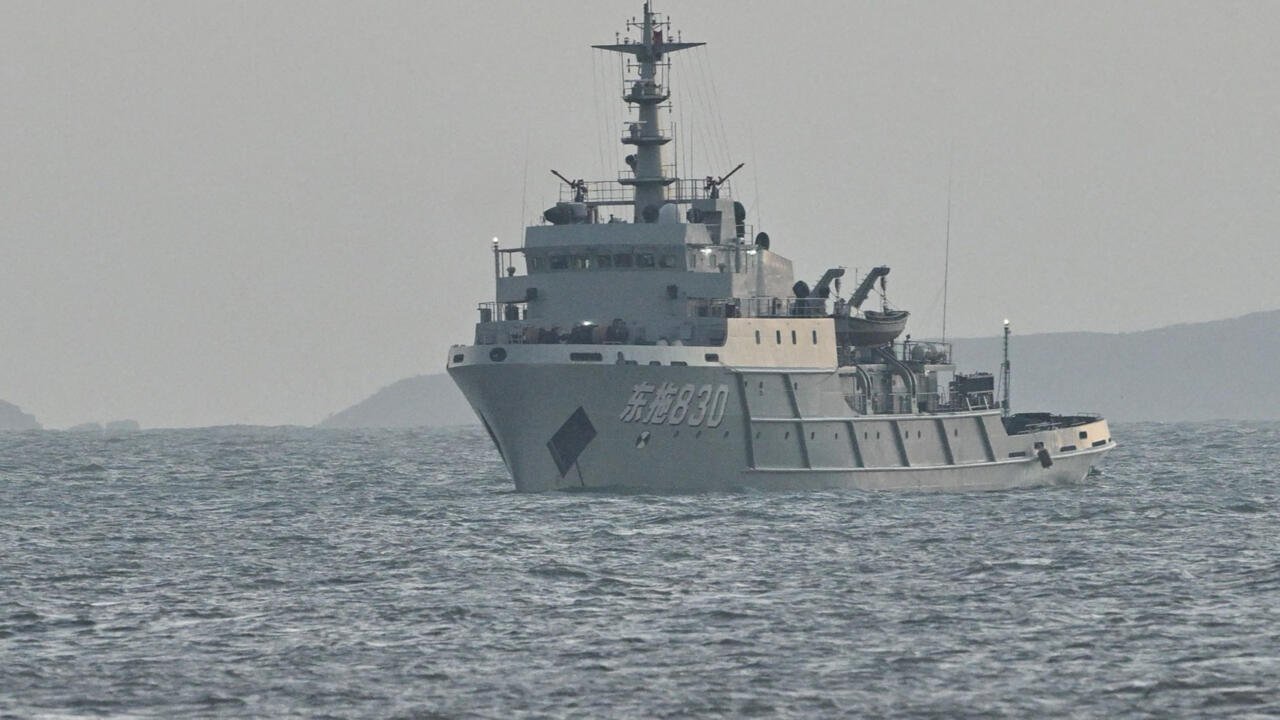
The exercise, termed “Justice Mission 2025,” involved an impressive display of military prowess, showcasing frigates, destroyers, fighter jets, drones, and various missiles, accompanied by heavy artillery. Chinese military officials issued severe warnings about potential threats, stating that those advocating for Taiwan’s independence would face dire consequences.
On social media, the military’s Eastern Theatre Command asserted that anyone contemplating independence would be met with overwhelming force. The second day of the exercises saw rockets fired into what Taiwan’s defense ministry identified as its contiguous zone, reaffirming the nature of these maneuvers, which included live-fire exercises— unusual practice since April.
Geopolitical Tensions and Military Response
Experts underscore the critical geopolitical context of these exercises, which come after noticeable changes in U.S.-China relations. Jonathan Sullivan from the University of Nottingham indicated that the dynamics shifted significantly after a recent meeting between Xi Jinping and Donald Trump. Yet, tensions resurfaced following a substantial arms deal approved by the U.S. to Taiwan, prompting feelings of betrayal in Beijing.
Moreover, remarks made by Japanese Prime Minister Sanae Takaichi about potential intervention in the event of a conflict in Taiwan added to China’s rising frustration, which views these external comments as unwelcome interference in its internal matters.
Internal Politics at Play
These military exercises serve a dual purpose: signaling to foreign nations while simultaneously applying internal pressure on Taiwan’s leadership. Grano highlighted the growing challenges faced by Taiwan’s President Lai Ching-te, who is already under scrutiny and facing potential impeachment and competition from the Kuomintang party, which has recently gained favor among voters wary of his hardline stance on China.
The exercises particularly aim to send a message to the Taiwanese populace regarding the dangers of supporting Lai Ching-te. Additionally, the event marks the first significant test for Yang Zhibin, the newly appointed commander of the Eastern Theatre Command, providing a chance to showcase military strength following previous leadership controversies.
In the face of recent purges within the military, these robust displays signal to the domestic audience and the international community that the Chinese military remains capable and unified. Sullivan emphasized that putting on such elaborate exercises quickly after a leadership change serves to quash any rumors about instability within the Chinese military command.
- China conducted vast military exercises around Taiwan, displaying advanced technology and warning against independence.
- The exercises coincide with shifting geopolitical dynamics following U.S. arms sales to Taiwan.
- Internal pressures on Taiwan’s leadership are a key factor in China’s military strategy.
- The drills aim to project strength both domestically and on the international stage amidst concerns over military stability.