

China’s Military Drills Near Taiwan Spark Concerns Amid Political Shifts
Recent live-fire military exercises by China around Taiwan have drawn significant attention, especially following remarks from former US President Donald Trump, who claimed he isn’t troubled by the situation and expressed a strong rapport with Chinese President Xi Jinping. This article delves into the implications of these drills and the broader geopolitical context surrounding Taiwan.
The Drills: An Overview
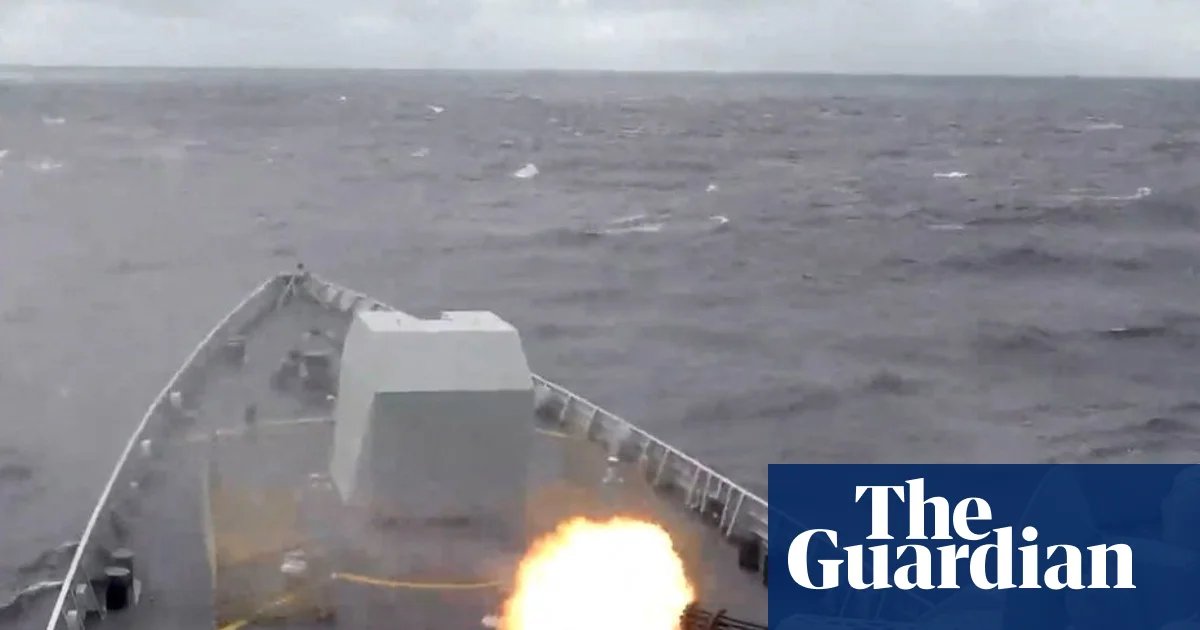
China’s People’s Liberation Army (PLA) commenced a series of military drills on Monday, which continued into Tuesday, involving live missile launches in the Taiwan Strait. According to the PLA, the purpose of these exercises, termed “Justice Mission 2025,” is to test naval-air coordination and precision targeting, focusing on neutralizing submarines and other maritime threats.
The military maneuver included the deployment of various assets such as destroyers, frigates, aircraft, and long-range missiles, all stationed close to Taiwan. This act is part of a larger strategy where Beijing asserts its claim over Taiwan, considered a breakaway province, with hopes of achieving military readiness for potential annexation by 2027 as per past US intelligence reports.
Responses and Reactions
As these drills unfolded, Taiwan’s defense ministry reported detecting numerous naval vessels, coastguard ships, and aerial units near its borders. The ministry condemns the maneuvers, emphasizing a clear aim to undermine Taiwan’s defense capabilities and sow discord within its society.
In a Monday conference, Trump stated, “I certainly have seen it … I don’t believe he is going to be doing it.” He characterized his relationship with Xi as commendable, asserting that he had not been informed about any impending military actions.
Political Implications
The US remains a critical ally for Taiwan against the backdrop of China’s expansionist ambitions, though Trump’s foreign policy views on the matter have fluctuated over the years. Just earlier this month, he met with Xi without discussing Taiwan, indicating a complex and evolving diplomatic landscape.
In response to the ongoing drills, Taiwan’s President Lai Ching-te reinforced that the island would not compromise its sovereignty, asserting readiness to defend against any aggressions while maintaining a commitment to reducing tensions.
International Dynamics
The military exercises have underscored rising tensions not only between Taiwan and China but also involving the US and Japan. Japan’s leaders have indicated that they may participate if a conflict arises over Taiwan, heightening fears of a broader regional conflict. Following the recent approval of a substantial arms sale from the US to Taiwan, Chinese officials have reiterated their discontent, framing the drills as a necessary counteraction.
Conclusion
The escalating military exercises near Taiwan exemplify the delicate balance of power in the region, with strategic implications for international relations. As both sides prepare for potential confrontations, the global community watches closely, aware of the thin line that separates diplomacy from conflict.
- China’s military drills around Taiwan involve advanced weaponry and naval maneuvers.
- US support for Taiwan amid these tensions remains critical, despite inconsistent foreign policy approaches.
- Political leaders in Taiwan reaffirm their commitment to sovereignty while dealing with China’s assertive posture.
- The involvement of Japan highlights potential wider repercussions in the event of conflict around Taiwan.