

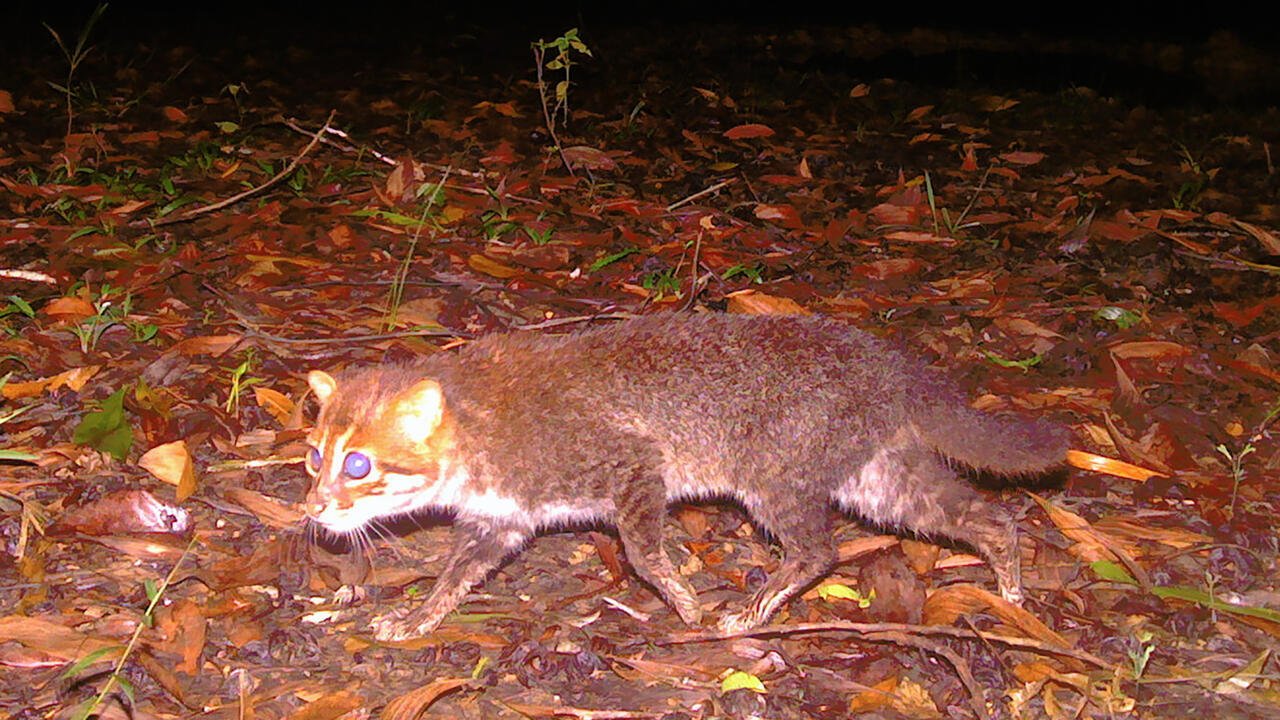
Elusive Flat-Headed Cat Rediscovered in Thailand After 30 Years
In a remarkable twist for wildlife conservation, a rare flat-headed cat, long believed to be extinct in Thailand, has been rediscovered three decades after its last confirmed sighting. This thrilling update comes from conservation authorities and non-governmental organizations that have been surveying the area.
The Rarity of the Flat-Headed Cat
Flat-headed cats are one of the world’s rarest wild felines, primarily residing in Southeast Asia. Their endangered status arises from the extensive loss of their natural habitat. These small cats, roughly the size of domestic cats, are easily recognizable due to their distinctive round, closely-set eyes. The last documented sighting of a flat-headed cat in Thailand was in 1995, making this recent discovery all the more significant.
A Promising Ecological Survey
Last year, an ecological survey commenced in Thailand’s Princess Sirindhorn Wildlife Sanctuary, utilizing camera traps to capture images of wildlife. The results have been promising, revealing 29 separate detections of flat-headed cats, as reported by the Department of National Parks, Wildlife and Plant Conservation in collaboration with the wildlife conservation organization Panthera.
Kaset Sutasha, a veterinarian and researcher at Kasetsart University, expressed both excitement and concern regarding the rediscovery. “While it’s thrilling to find them, the ongoing fragmentation of their habitat has left these cats increasingly isolated,” he noted.
Challenges in Counting
Determining the exact number of individuals from these sightings presents challenges. The flat-headed cat lacks unique markings that would assist in tracking, making it difficult to ascertain their population density. However, conservation manager Rattapan Pattanarangsan suggested that the sightings indicate a relatively high concentration of the species in the sanctuary. Notably, footage also included a female flat-headed cat with her cub, a hopeful sign for a species that typically bears just one offspring.
Habitat and Threats
The flat-headed cat thrives in dense wetland ecosystems such as peat swamp forests and freshwater mangroves—areas that are notoriously hard for researchers to navigate. According to the International Union for Conservation of Nature, there are an estimated 2,500 adult flat-headed cats left in the wild, with the species classified as endangered. In Thailand specifically, the flat-headed cat has been labeled as “possibly extinct” for years.
The habitat of these cats has seen significant fragmentation primarily due to land conversion for agriculture. This situation, along with the threats posed by disease transmission from domestic animals, further complicates their survival. Kaset, who has devoted years to studying wild cats, emphasized that while this rediscovery is promising, it marks only the beginning of more significant conservation efforts needed to ensure their sustainability in the wild.
Looking Ahead
“What comes next is crucial—how can we create a situation where they can coexist with us without fear of extinction?” Kaset pointedly asked, highlighting the importance of proactive conservation measures. As the world watches these developments, hopes are high for the flat-headed cat’s future in Thailand.
- Flat-headed cats, believed extinct, were recently rediscovered in Thailand after a 30-year absence.
- The ecological survey recorded 29 detections, suggesting a population in the area.
- The species is classified as endangered with about 2,500 individuals remaining globally.
- Future conservation efforts are critical for the survival of these elusive felines.