

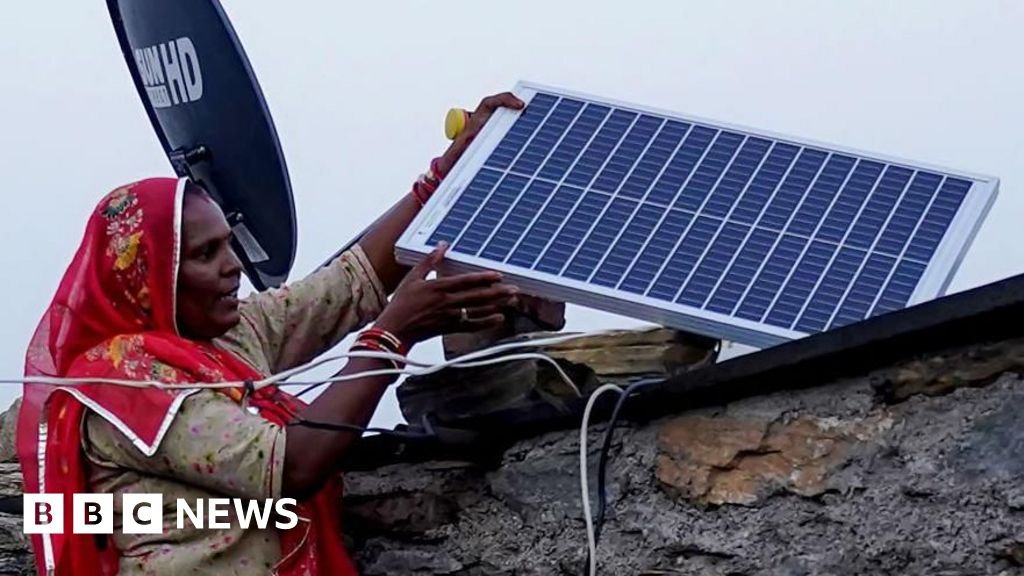
India’s Solar Energy Boom: Bright Futures or Wasteful Shadows?
India’s journey into solar energy has garnered global acknowledgment for its rapid expansion and transformative potential. However, critical questions loom regarding the sustainability of this transition, particularly when it comes to managing the waste generated by aging solar panels. As the nation proudly strides toward renewable energy dominance, the need for a comprehensive waste management strategy becomes ever more pressing.
The Rise of Solar Power in India
In just over ten years, India has ascended to become the third-largest solar energy producer in the world. Solar energy has become pivotal to the country’s climate strategy, reflected in the proliferation of solar parks and countless rooftop installations across urban and rural landscapes. According to government statistics, approximately 2.4 million households have integrated solar systems through a subsidy scheme, further cementing solar’s role in the energy sector.
This growth in the solar sector has successfully reduced India’s dependence on coal, with solar currently providing over 20% of the country’s energy. Despite the strides made, a challenge awaits: the environmental implications of solar panel disposal pose a risk that can compromise the ecological benefits of solar energy.
Environmental Concerns with Solar Panels
While solar panels can be largely recycled, they contain trace amounts of toxic metals such as lead and cadmium that can contaminate the environment if not handled properly. Typically, these panels have a lifespan of about 25 years, after which they are removed and discarded. Alarmingly, India has yet to allocate a dedicated budget to solar waste recycling and currently possesses only a handful of facilities capable of processing old panels.
The Tipping Point of Solar Waste
Although precise data on solar waste in India is scarce, estimates suggest that the nation could produce around 100,000 tonnes by 2023, with projections soaring to 600,000 tonnes by 2030. Experts warn that while the current volume is manageable, it is expected to balloon significantly, creating a potential waste crisis without urgent investment in recycling infrastructure.
According to a report by the Council on Energy, Environment and Water (CEEW), India could generate over 11 million tonnes of solar waste by 2047. Addressing this will necessitate nearly 300 dedicated recycling facilities and an investment nearing $478 million over the next two decades, a hefty yet necessary financial commitment.
Comparative Perspectives and Regulatory Frameworks
Similar projections for solar waste are emerging globally, with the United States and China also anticipating substantial waste by 2030 due to significant expansions in solar capacity. Nevertheless, the regulatory frameworks differ widely. The U.S. primarily relies on market-driven recycling processes influenced by varied state regulations, while India’s approach has recently evolved.
In 2022, India introduced e-waste rules for solar panels, shifting the responsibility for collection and recycling onto manufacturers. However, enforcement remains inconsistent, particularly for smaller installations that constitute a fraction of overall energy production. As a result, many damaged or discarded panels often find their way to landfills or are processed by unregulated recyclers equipped with low-quality methods, increasing the risk of toxic material release.
Facing the Challenges Ahead
As noted by environmental experts, the perception of solar energy as a completely clean option could become misleading if we neglect proper recycling strategies. The potential waste impact could overshadow the initial benefits if no proactive measures are implemented.
Nonetheless, opportunities coexist alongside these challenges. With waste generation expected to rise, so too will the demand for firms adept at managing solar waste. By improving recycling technologies, India could reclaim a significant portion of valuable materials while simultaneously alleviating environmental risks. Currently, most methods recover low-value materials like glass and aluminum, leaving precious metals largely unharvested.
The immediate future is a crucial period for India’s solar ambition, necessitating swift action to build a robust recycling system, raise public awareness, and integrate waste management into existing solar business models. Solar energy providers must also be held accountable for the lifecycle of their panels, ensuring a more sustainable future.
Conclusion
While India’s strides in solar energy offer great promise, the impending challenge of solar waste demands urgent attention. Without a solid recycling strategy in place, the achievements of today could lead to significant environmental repercussions tomorrow.
- India stands as the third-largest solar energy producer globally.
- Over 100,000 tonnes of solar waste is expected by 2023, potentially soaring to 600,000 tonnes by 2030.
- Urgent investment in dedicated recycling facilities is required to manage the projected waste by 2047.
- Proper recycling can reclaim valuable materials and mitigate environmental risks linked to solar panel disposal.