

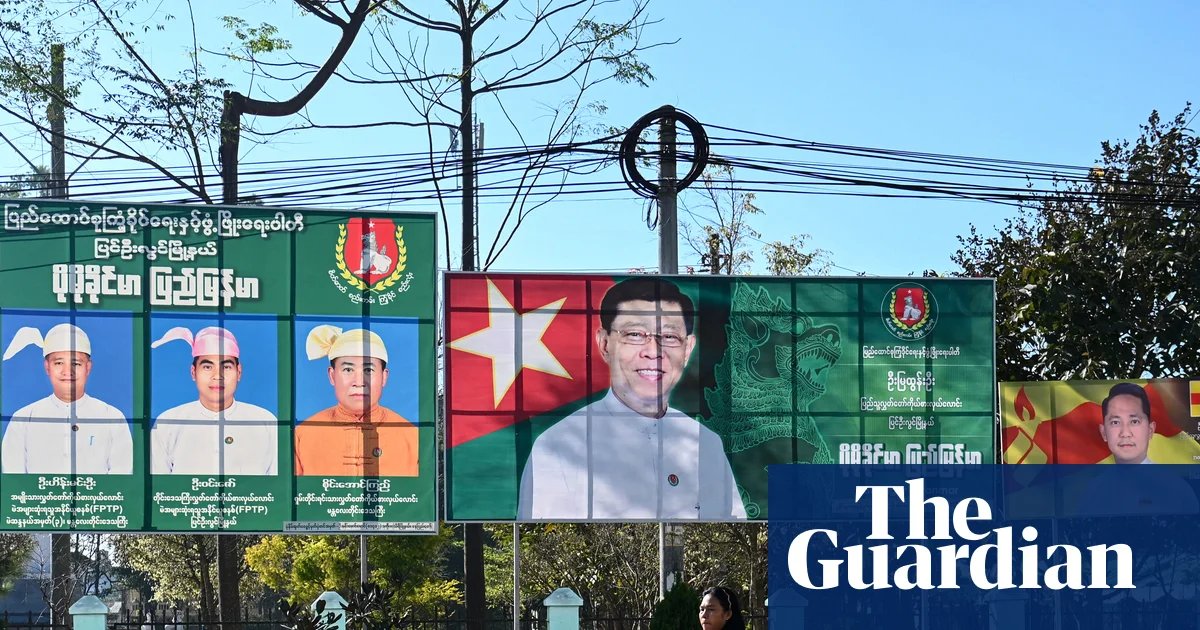
Myanmar’s Upcoming Election: A Struggle for Legitimacy Amidst Turmoil
Myanmar stands on the brink of its first election since the military coup in 2021. With its former leader incarcerated, the disbandment of its most influential political party, and approximately a third of the nation either contested or under rebel control, skepticism surrounds the military’s assertion that the upcoming election on December 28 will be “free and fair.”
As expressed by Pai, a 25-year-old refugee from Myanmar, “This is not for the people; this is for themselves.” Many believe the ruling junta is searching for a way to escape the bind they currently find themselves in.
On the cusp of the polls, nearly five years since they seized power, the military leaders hope this election legitimizes their authority and helps them shed their image as international outcasts.
While rejecting criticism, military officials claim the election reflects public support rather than coercion. Junta spokesperson Zaw Min Tun stated, “The election is being conducted for the people of Myanmar, not for the international community. Whether the international community is satisfied or not is irrelevant.”
Many Western governments and the United Nations have dismissed the election as a farce. Nevertheless, China’s backing represents a crucial lifeline for the junta. Known for aiding the military in its battles, China views this electoral event as a possible pathway to restoring stability in Myanmar.
Analysis indicates that armed conflict in the country has only intensified in the past year. From January to late November 2025, military air and drone strikes increased by roughly 30% compared to the previous year. Civilian infrastructure, including schools and hospitals, has frequently been targeted, with a recent military strike on a healthcare facility in Rakhine state resulting in numerous casualties.
Moreover, forced conscriptions have increased by 26%, as the military resorts to abductions to replenish its dwindling forces. Young individuals are fleeing military-controlled areas like Yangon, fearing they may be forcibly recruited.
Election Under a Shadow
The military government’s paranoia has led to the enactment of a new election protection law, which mandates harsh penalties for any criticism, including a minimum of three years in prison or even the death penalty. Since July, over 200 people have been arrested, even for merely showing support on social media for anti-junta sentiments. In cities like Yangon, authorities have been actively visiting homes to urge compliance with voting mandates, leaving citizens feeling compelled to obey.
Khin Ohmar, a pro-democracy activist in exile, states, “It’s well-known how ruthless this military is and will continue to be. Those seen as disapproving of the junta’s sham election face high risks.”
There are 57 parties on the ballot, yet most are perceived as closely linked to the military, creating a façade of choice without genuine opposition. Only six parties will compete on a national level, notably including the military-backed Union Solidarity and Development Party, which has positioned itself uncontested in several constituencies.
Aung San Suu Kyi’s National League for Democracy, which had dominated the 2020 elections, has been dissolved for refusing to register with the junta’s election commission. The dissolution of many ethnic parties further illustrates the narrow political landscape; according to electoral observers, a staggering 57% of the parties from the last election have vanished, despite their prior electoral successes.
The military has declared that 56 of 330 townships will be excluded from voting, along with an additional 3,000 wards and villages. This strategic exclusion highlights the territory lost by the junta since the coup, despite regaining some ground on the battlefield.
Following the coup’s onset, which saw the military imprison Aung San Suu Kyi and unleash violence on democratic protesters, communities armed themselves to resist. An ongoing standoff with long-established ethnic armed groups has left military forces overstretched. Despite intense airstrikes, the junta lost considerable territory, prompting speculation about its potential downfall.
China’s support has proven instrumental in the military’s recovery, as it stifled vital supplies to key opponents. Several prominent ethnic groups returned territories they controlled, allowing the junta to regain focus on other battle fronts, particularly through enforced conscription and enhanced military coordination.
In the lead-up to the election, military bombardments have only intensified, as authorities strive to solidify control in areas slated for voting. Analysts predict that these tactics will persist beyond the election. Richard Horsey, a senior advisor, noted that while ceasefires may be negotiated post-election, they would serve merely as tactical respites to allow the military to redirect its resources.
“They are determined to reclaim as much territory as possible that they’ve lost since the coup,” Horsey asserts. “This is not about transitioning to a civilian government with a softer approach.”
- Myanmar’s military prepares for elections amidst widespread skepticism regarding their fairness.
- Promotion of a new protection law signifies the junta’s extreme measures against dissent.
- The political landscape is heavily manipulated, with many opposition parties dissolved.
- Intensified military action continues as the coup’s aftermath unfolds, with ongoing struggles for power.