

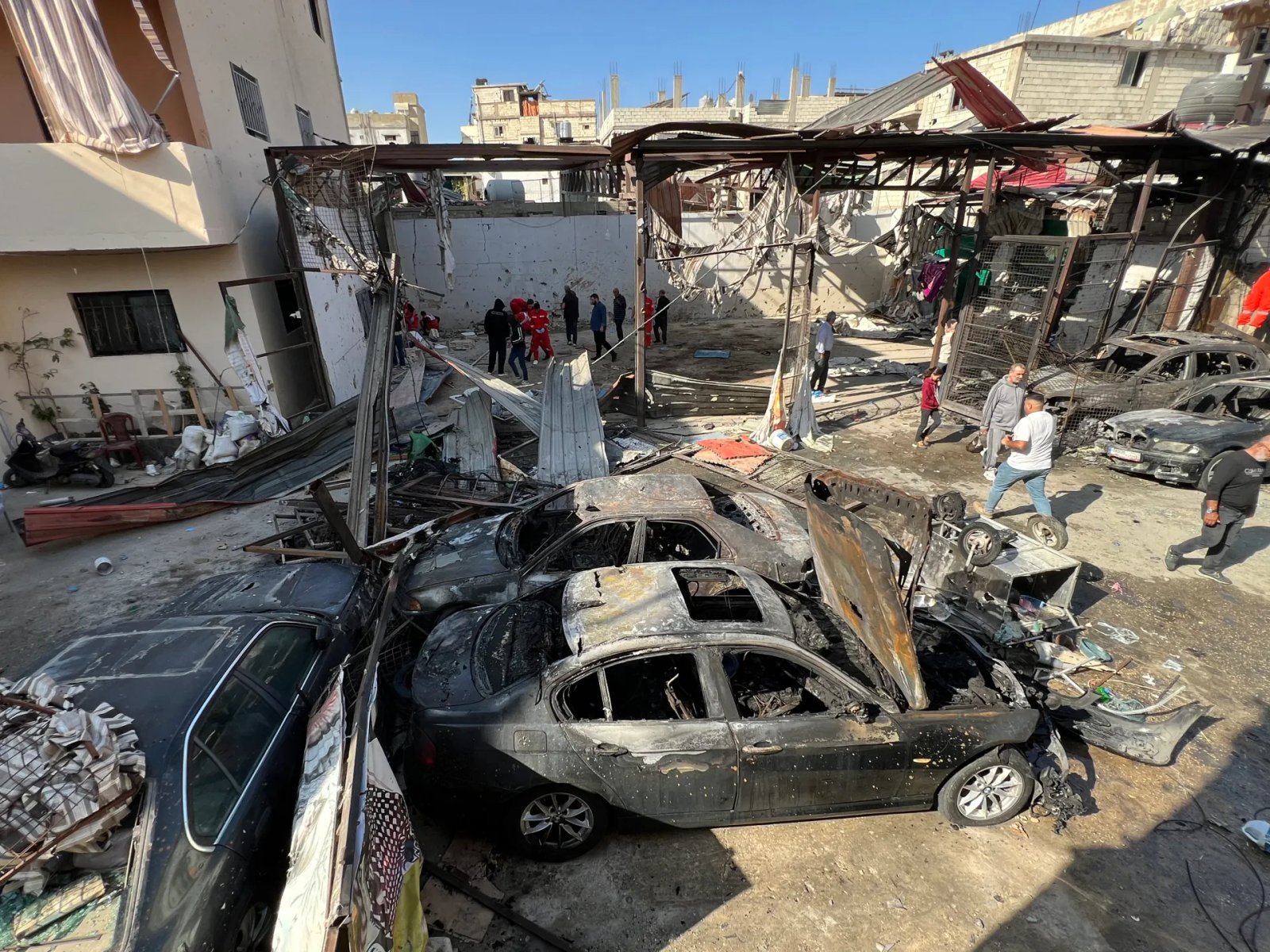
Escalating Tensions: Israeli Air Strikes Breach Ceasefire in Southern Lebanon
Recent air strikes by Israeli forces near Sidon have resulted in the deaths of at least three individuals, marking yet another violation of the November 2024 ceasefire agreement with Hezbollah. This incident illustrates the ongoing conflict between Israel and Lebanon, raising alarms over the fragile security situation in the region.
Details of the Latest Attack
According to Lebanon’s National News Agency, the Israeli air strike targeted a vehicle on Quneitra Road in the southern district of Sidon. The Lebanese Ministry of Health confirmed the fatalities, while the Israeli military acknowledged that the operation aimed at Hezbollah members, offering little additional information.
This air strike follows another recent attack on Sunday that resulted in one fatality and two injuries, with Israeli forces claiming to have killed a Hezbollah member in that incident. Such events underscore the regularity of Israeli strikes, which have become a near-daily occurrence since the ceasefire was established.
Repeated Violations and International Concerns
Since the ceasefire took effect, Israel has conducted approximately 1,600 air strikes across Lebanon, according to research compiled by the Armed Conflict Location and Event Data Project. The United Nations has reported that these strikes have claimed at least 127 civilian lives, calling for an urgent and impartial investigation into the situation.
Despite the ceasefire’s stipulations aimed at disarming Hezbollah in southern Lebanon, Israeli air strikes have persisted. Prime Minister Nawaf Salam recently indicated that Lebanon is nearing completion of disarmament efforts in the southern region—a key tenet of UN Security Council Resolution 1701, which aims to restrict military operations to the Lebanese army and UN peacekeepers.
Diplomatic Efforts Amidst Ongoing Hostilities
he political landscape remains complicated, as Hezbollah has long dismissed calls for its complete disarmament, arguing that its arms are essential for Lebanon’s defense against Israeli aggression. Leader Naim Qassem has reiterated the group’s compliance with the ceasefire but maintains that Hezbollah will keep its weapons outside of the specified disarmament zone.
The ceasefire agreement had compelled Israeli troops to withdraw from southern Lebanon by January; however, Israeli forces have only partially retreated, maintaining a presence at five border outposts within Lebanese territory. Hezbollah has previously signaled that it would not fully honor its commitments under the agreement as long as Israeli forces remain in the region.
Despite these challenges, discussions regarding the ceasefire continue. A recent meeting took place in Naqoura where Israeli and Lebanese civilian and military delegations engaged in closed-door negotiations. Following these discussions, Lebanese President Joseph Aoun appointed diplomat Simon Karam as the chief civilian negotiator for Lebanon, a decision that drew criticism from Hezbollah due to Karam’s previous role as Lebanon’s ambassador to the U.S.
During a press conference, President Aoun emphasized that facilitating the return of displaced Lebanese civilians to their homes is vital for addressing broader aspects of the ceasefire agreement. He announced the next meeting of the oversight committee for January 7 and welcomed a diplomatic deal reached in Paris aimed at organizing an international conference in early 2026 to support Lebanese military and security forces.
Conclusion
The persistent violence and ongoing negotiations highlight the complexities of the Israeli-Lebanese relationship and the precariousness of the ceasefire in place. With continued international attention on the matter, the region remains on edge as dialogues take place amid military actions.
- Israeli air strikes continue to violate the November 2024 ceasefire agreement with Hezbollah.
- Recent attacks have resulted in multiple casualties, drawing condemnation from international bodies.
- Efforts for disarming Hezbollah are underway, amidst ongoing military presence from Israeli forces.
- Diplomatic discussions are ongoing, with plans for future meetings to address the conflict.