

Reflections on Chess and Life
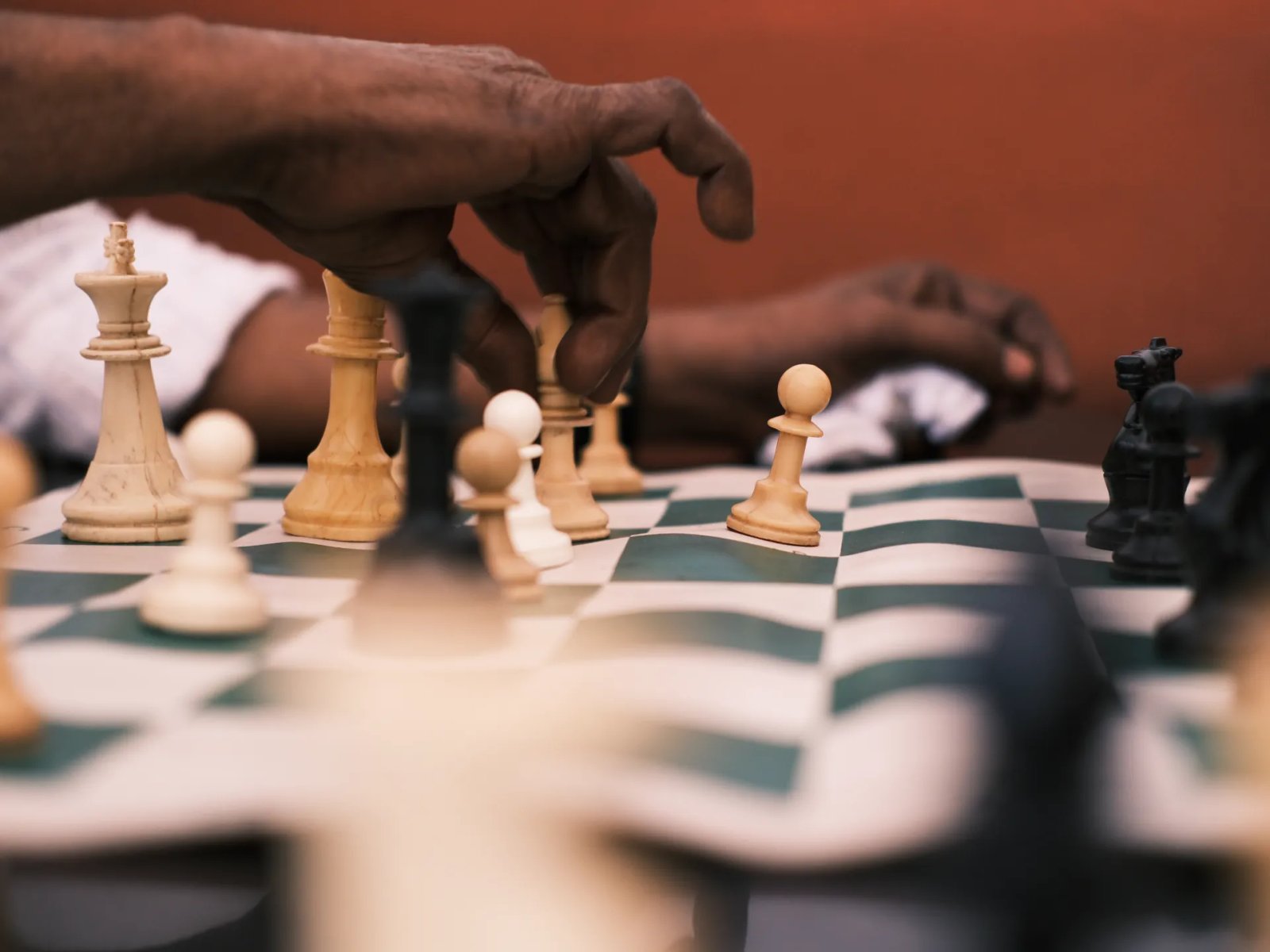
On a bright November afternoon in Goa, I found myself captivated by a familiar scene unfolding on a chessboard. Indian grandmaster Arjun Erigaisi, currently ranked sixth in the world, faced off against his Chinese opponent Wei Yi. Despite playing in front of a crowd of schoolchildren who admired him, Erigaisi experienced a crushing defeat. He began the match by moving his pawn to the center of the board and hitting the button on the dual-timer chess clock, signaling the start of the game.
In a country where chess originated, grandmasters emerge as effortlessly as coconut trees lining the coast. This game becomes part of a child’s life early on, slipping into classrooms, kitchens, and modest homes, teaching them the art of strategy or, more often, the skill of resilience. That was certainly the case for me. My brilliant uncle, Periappa, with no means to pursue a higher education and a temperamental nature that kept him moving from job to job, often found himself babysitting me. I was around six years old when he introduced me to my favorite legacy: chess.
Years later, I vividly remember Periappa holding a worn, toy-like plastic knight in front of me and exclaiming, “These are my favorites. They can be lethal if you master them.” In that moment, I understood that I had discovered something I would always be drawn to. Chess was not merely a pastime for me; it became an indelible part of my existence, an exhilarating experience. My relationship with chess felt almost instinctive.
As a challenging, friendless child, I was often sulky when Periappa encouraged me to play. I expected to win because why would an adult take joy in beating a six-year-old? Everything in life led me to believe he would willingly lose, driven by love. However, his love was not about mercy; it was about strategy. He imparted my first crucial lesson about chess: in this game, you do not truly lose. You either gain knowledge or provide it. Naturally, I was unprepared for lessons. My frustration boiled over as I tossed pieces around, cried, and ultimately walked away from chess altogether. If my chess career ever existed, it was brief. I do recall winning a local tournament, but soon became distracted by school, boys, and life, gradually drifting apart from both my uncle and chess.
By the time I tried to return to the game, he had already passed away. Perhaps it was his death that reignited my interest. The chessboard became the only space where I still felt his presence. This time, I committed myself to the game. When the pandemic hit, the chessboard served as my sole escape, a sanctuary amid the chaos of reporting and the uncertainties of life. It was an opportunity to wrestle with my own thoughts while hearing his voice within me.
Finding Your Style in Chess
As you delve deeper into chess, you inevitably develop a personal style, akin to how writers cultivate their own voices. Bobby Fischer was renowned for his affinity for bishops, while Garry Kasparov was intimidating due to his aggressive rook maneuvers during the middlegame. Magnus Carlsen, a modern legend, is celebrated for his remarkably active king in endgames. Erigaisi earned the nickname “the madman on the board” for playing with a reckless abandon, often disregarding outcomes, which makes him both audacious and formidable—precise as a sniper, but only when the game unfolds as planned.
Unfortunately for Erigaisi, things didn’t unfold smoothly against Wei Yi. With just a minute remaining on the clock, Erigaisi made a critical blunder, sacrificing his rook. From that moment onward, his movements increasingly undermined his position. As I sat in the playing hall, surrounded by two rows of spectators, my notebook resting on my knee, I observed him lose piece after piece, akin to an animal being stripped bare, unable to escape its fate. It was a dramatic spectacle that held the audience enthralled.
The Addiction of Chess
My years as an amateur chess enthusiast have shown me that the passion for the game often stems from specific elements, like the precise and disciplined chaos of the Erigaisi–Yi match or an obsession with a particular piece. For Periappa, it was the knight. For me, the term zugzwang has always held a special significance. This endgame scenario requires a player to make a move when every option only worsens their position. There’s no ability to pass or take a breather. The board offers alternatives but provides no respite. I have spent years attempting to grasp zugzwang, hoping it could clarify the dissolution of my relationship with Periappa.
During my childhood, our conversations flowed effortlessly, as they often do before life’s complexities intervene. However, maturity reshaped the contours of our closeness, revealing his imperfections. He was quick to anger, challenging in his roles as husband and father, and his views on my education, relationships, and even chess became less welcome over time. The unraveling was gradual—an accumulation of unresponsive calls and delayed visits, leading to diminishing topics of conversation. Our relationship culminated with me watching him suffer in pain at a hospital in Bombay, feeling helpless with nothing left to say. By the time he passed, we had drifted to separate corners, much like chess pieces isolated in an endgame, trapped in a self-created emotional zugzwang.
Reflection and Grief
Following Periappa’s passing, my exploration of zugzwang took on an obsessive quality, as I sought to impose an elegant chess perspective on the painful events we endured. I could spend hours studying the famed 1923 game between Aron Nimzowitsch and Friedrich Saemisch, widely referred to as the “immortal zugzwang.” This match is celebrated for its conclusion, where the white pieces find themselves in total paralysis, as every single legal move leads to an impending downfall. There was no checkmate, nor overt humiliation—just a quiet acceptance of the inevitable.
After Periappa’s death, my grief didn’t come rushing in; instead, it seeped through slowly. I regretted never sharing with him that mastering the knight had become my personal Everest. I wished he had known that my fondness for knights stemmed solely from his own love for them. Those knights settled in my mind, occupying a primal corner where my childhood dwells. This small yet profound preference, passed down casually, remained long after our conversations faded. It bears no deeper meaning; perhaps that’s what endures in relationships—unremarkable details that nestle within us, much like unused cables or outdated email accounts.
Each time I return to zugzwang, it imparts new lessons. These days, the notion that resonates with me is the complexity of deep endgames, where every choice feels painful. Zugzwang acts as a reflective surface, revealing the silhouette of a chipped plastic knight held up to my face, prompting me to make a choice.
Conclusion
Chess serves as more than a game; it reflects the intricate relationships and emotional realities of our lives. The lessons learned from the board resonate beyond it, shaping our understanding of love, loss, and the complexity of connections. Each piece on the chessboard has a story, just like the people who leave their imprints in our hearts.
- Chess is a significant part of Indian culture, teaching children strategy and resilience.
- Personal relationships can shape our understanding of chess and its deeper meanings.
- Zugzwang represents life’s tough choices where every decision comes with consequences.
- Memories and preferences can endure even after relationships have changed or faded.