

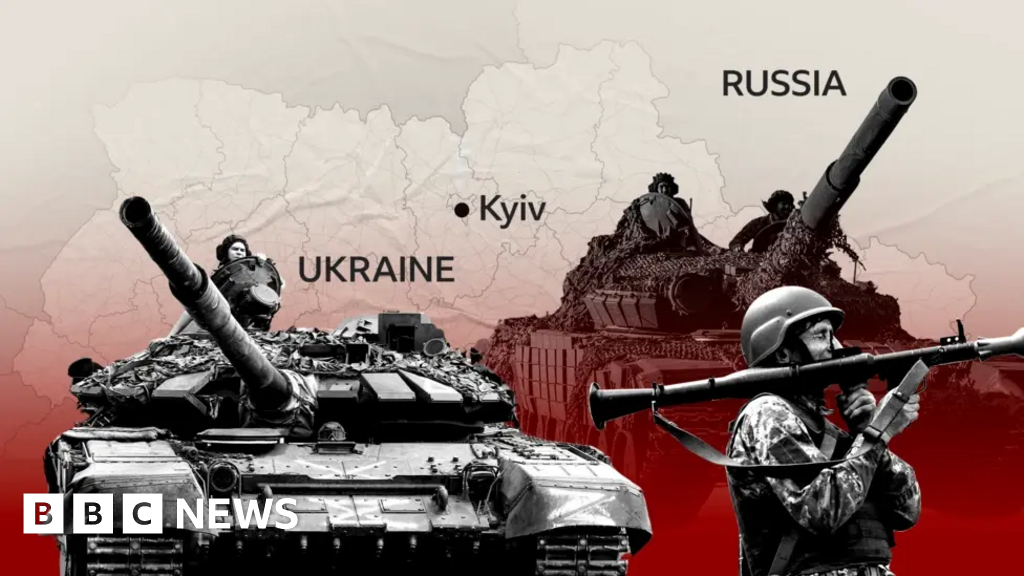
The Ongoing Conflict in Ukraine: A Summary
As we near the fourth anniversary of Russia’s full-scale invasion of Ukraine, the situation remains intense and evolving. Since the onset of the invasion, the conflict has led to significant changes on the ground, particularly in eastern Ukraine, where Russian forces have expanded their territorial control. This article explores the current landscape of the conflict and key developments that continue to shape the ongoing war.
Russia’s Persistent Advance in the East
Analysts from the Institute for the Study of War (ISW) report that Russia has claimed approximately 6,000 square kilometers of territory since 2025, although independent estimates suggest it’s closer to 4,700 square kilometers—an area roughly double the size of Moscow. Russian troops have been steadily progressing through the Luhansk and Donetsk regions, also known collectively as the Donbas, thereby encircling numerous villages and towns.
Alongside efforts to capture these critical regions, Russia has attempted to gain full control over the areas of Zaporizhzhia and Kherson to the west. Early in the conflict, referendums were conducted in these areas in an effort to annex them, mirroring the annexation of Crimea in 2014. Despite these efforts, full control has yet to be achieved.
A proposed peace plan backed by the US would necessitate Ukraine ceding control over Luhansk, Donetsk, and Crimea, along with currently occupied sections of Zaporizhzhia and Kherson. Ukrainian forces would have to withdraw from parts of Donetsk, transforming them into a demilitarized zone under Russian influence. However, President Volodymyr Zelensky has firmly stated that Ukraine will not yield the Donbas as a peace negotiation tactic, as he fears this could set the stage for future Russian aggression.
Recent Developments in Key Areas
According to recent findings from the ISW, a fortified “belt” has been constructed in western Donetsk, running approximately 50 kilometers. The report mentions that Ukraine has invested considerable resources over the past 11 years to reinforce this defense system.
Meanwhile, Russian forces have made key advances near the eastern town of Pokrovsk, which has been targeted for nearly two years. The capture of this critical logistics hub could facilitate further movements toward the remaining Ukrainian-controlled cities of Kramatorsk and Slovyansk. Despite some losses, military experts warn that seizing the rest of Donetsk would be a costly endeavor for Russian forces.
Intensifying Russian Operations and Ceasefire Talks
In the north, Russian efforts to advance toward the city of Kupyansk are ongoing, with the intention of encircling the northern Donetsk region. Analysts speculate that establishing a buffer zone could help secure the Russian border and maintain artillery range near Kharkiv, Ukraine’s second-largest city.
Despite the ongoing hostilities, ceasefire negotiations have been initiated since the beginning of 2025, following a change in US leadership. New proposals aim to halt the conflict; however, disagreements remain, particularly regarding NATO membership prospects for Ukraine and Russia’s desire for full control over Donetsk and Luhansk.
A Three-Year Struggle
Russian military engagement began dramatically on February 24, 2022, with missile strikes across Ukraine. Initial advances allowed Russian troops to secure significant territories, but they faced formidable resistance coupled with logistical challenges. Ukrainian forces effectively utilized Western-supplied armaments, such as the NLAW anti-tank systems, which proved vital in halting the Russian advance.
By the end of 2022, the landscape had shifted remarkably. Following unsuccessful attempts to seize Kyiv, Russia retreated from northern regions, paving the way for Ukrainian forces to regain control of strategic locations, including Kherson. Since then, the conflict predominantly resides in eastern Ukraine, with Russian forces gradually making incremental gains. Reports estimate that between 165,000 and 235,000 Russian troops have been lost in the conflict, while Ukraine’s casualty figures remain a point of debate.
Conclusion
The conflict in Ukraine continues to shape the geopolitical landscape significantly. As both sides remain engaged in combat, prospects for peace negotiations and territory control are ever-changing. Observers will need to closely monitor future developments, as the evolving situation will likely have lasting implications for both Ukraine and Russia.
Key Takeaways
- Russia has expanded its territorial control in eastern Ukraine, claiming significant gains in recent years.
- Ukraine remains committed to defending the Donbas region and has launched counter-offensives to regain lost territory.
- Ceasefire negotiations are ongoing but face hurdles due to conflicting demands from both sides.
- The human and economic cost of the conflict continues to rise, emphasizing the urgent need for resolution.