

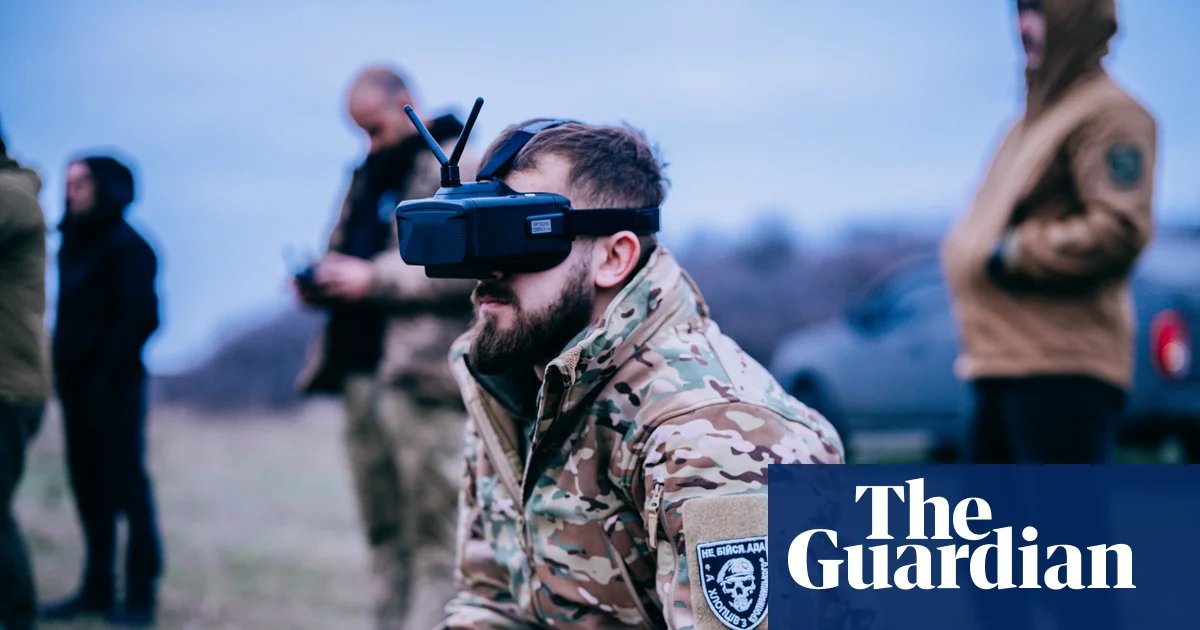
The Role of Drone Crews on Ukraine’s Frontline
In a cozy bunker made from wooden logs, Dmytro plays a crucial role in assisting drone crews stationed at the front line. His screen flickers with a multitude of video feeds from an increasingly heated segment of the conflict, extending approximately 50 miles east of Zaporizhzhia city, from Pokrovske to Huliaipole. Dmytro, aged 33, serves in the 423rd drone battalion, a specialized unit established just in 2024. He diligently cycles through various feeds on Ukraine’s Delta battlefield system, enlarging each view. The footage ranges from grainy images captured by one-way FPV (first person view) drones to clearer video from commercial Mavic drones. Occasionally, he views a bomer drone display, showcasing available munitions marked in green.
Preparing for the Challenge
The landscape visible on Dmytro’s screens is emblematic of a unique geographical area. Unlike the more fortified region of Donetsk, this flat agricultural territory is dotted with ruined villages, forming the junction between the Dnipropetrovsk and Zaporizhzhia oblasts. Dmytro and his commander, Captain Kostya, note that the terrain here presents its own set of defense challenges. “There are numerous fields, and should we lose a height advantage, we risk having to retreat several kilometers,” Kostya remarks.
Unforeseen Challenges
A sudden Russian offensive near Huliaipole caught Ukrainian defenders off guard. The area, which had been held by a weary 102nd territorial defense brigade since 2022, saw significant losses as they could not cope with the unexpected assault. As a result, a battalion had to completely withdraw, leading to a territorial loss of six miles in November.
According to Serhii Kuzan, chair of the Ukrainian Security and Cooperation Centre, the intense defenses to the east were partly to blame. “The concentration of forces in Pokrovsk and Myrnohrad depleted our reserves, paving the way for this offensive,” he explains. Troops from the 225th assault regiment were redeployed to stabilize the situation by the month’s end.
Drone Warfare Dynamics
While Ukraine’s Mavic drones possess exceptional reconnaissance capabilities, with skilled pilots detecting movement from hundreds of meters away, weather conditions have benefitted Russian forces. Kuzan notes that they exploit the frequent autumn fog to their advantage, alongside deploying 250kg glide-bombs.
Despite having around 300 jets, the Russian air force can launch munitions from distances of 50 to 75 miles—beyond the reach of Ukrainian air-to-air missiles. Although radar systems can track planes and missiles, defenders receive only about four minutes’ warning before an attack. Fortunately, electronic countermeasures divert enemy projectiles effectively around 70% of the time.
Life on the Frontline
When the visibility improves, drone crews engage in relentless defense operations. Russian soldiers tend to advance in small groups to pre-designated locations in hopes of evading detection from the drones overhead, often lacking basic supplies. However, clear weather makes it easier to spot infiltrators due to the flat landscape and sparse vegetation.
Maksym, 29, and Serhii, 24, recently returned from a five-day stint at the front. As part of a team combining FPV and Mavic pilots, they take their downtime seriously—one even indulges in video games like Stalker 2: Heart of Chornobyl, a shooter set in a post-apocalyptic world. “It’s quite similar to our flying experience,” Maksym shares with a grin. “Practicing in games helps us with our actual missions.”
The pilots often find brief windows for rest depending on Russian activity levels. “You can manage to squeeze in 15 minutes of sleep if needed,” Maksym claims. Both types of drones typically last around 20 minutes on a single charge, which allows for consecutive deployments if necessary. They can strike at distances of up to 9 miles (15 km), or even 18 miles with assistance from a secondary “mother drone” that acts as a relay.
Reflecting on Their Duties
When recalling their most recent missions, Maksym recalls a day in which they reportedly killed seven Russian soldiers and wounded three. “It’s just a regular day for us,” he mentions, reflecting on the somber reality of their situation. “We feel a sense of joy because we’ve harmed our enemies.”
The statistics reveal a sobering truth. The 423rd battalion reported killing 418 Russian soldiers in November, matching the performance of other specialized Ukrainian drone units. Each unit tracks its kills in a points system that rewards them with additional supplies based on their success. In November, Russia experienced an estimated 1,033 daily casualties, totaling roughly 382,000 in 2025, according to British assessments. Drones were implicated in 60% of these casualties, as emphasized by Oleksandr Syrskyi, Ukraine’s chief military commander, who noted that Ukrainian pilots conduct around 10,000 combat missions daily.
Future Prospects and Challenges
Vitaliy Hersak, commander of the unit, reflects on the novelty of drone warfare, having established the battalion last November. He confidently states, “We’re eliminating about one and a half enemy battalions monthly,” which might be an optimistic estimate, but it’s close to reality. The challenge remains that while Russia seems to have endless reinforcements, Ukraine is struggling with infantry shortages, making it difficult to maintain control along certain sections of the line.
As the war continues farther east, experienced drone operators from the Da Vinci Wolves battalion contemplate the extreme demands of their roles. Some estimate they may have neutralized around 1,000 enemy troops, although uncertain. “I could manage this for another six months at most,” one pilot admits, though neither knows how long the war will drag on.
Despite the hardships, the resolve to continue resisting remains steadfast. However, sustaining an active defense will necessitate recruiting new pilots and allowing longer breaks from the front lines. Sasha, a 23-year-old learning to fly FPV drones, reveals that he signed up just days before boarding a train, realizing he couldn’t sit idle. He admits, “I haven’t been on duty yet,” but emphasizes, “I had to make a move.” Although reluctant to comment on peace negotiations, he simply states, “For us, survival is the priority.”
Conclusion
As the conflict rages on, the role of drone crews like those of the 423rd battalion becomes increasingly crucial. Their technology and tactics reflect a significant evolution in modern warfare, showcasing the complexity and intensity of the ongoing struggle. With a steadfast commitment to their mission, these pilots continue to navigate the challenges of warfare in the hope of achieving a sustainable presence in their homeland.
Key Takeaways
- Dmytro and his team monitor drone feeds to assist troops on the frontlines.
- Ukrainian drone units face immense challenges, including adverse weather and supply shortages.
- Advanced drone technology plays a pivotal role in modern combat strategies.
- Maintaining morale and recruiting staff is essential for sustained defense efforts.