

Understanding Organ Donation: Importance, Frameworks, and Conversations
Organ donation has the potential to save countless lives, yet the number of deceased donors each year remains surprisingly low, with reports indicating figures in the low double digits. This article explores the legal frameworks governing organ donation, the crucial processes involved, and the vital discussions that can empower families during difficult times.
How Organ Donation Functions
Organ donation within Singapore operates under two primary legal frameworks. The first is the Human Organ Transplant Act, which encompasses the donation of kidneys, heart, liver, and corneas. This law applies to all citizens and permanent residents aged 21 and above, provided they are not mentally disordered—unless they have opted out of the program.
For those who choose to opt out, it’s worth noting that they will be assigned a lower priority on waiting lists for future organ transplants. The rate of individuals opting out has remained consistent, sitting at around 3% annually.
The second legal framework is the Medical (Therapy, Education and Research) Act, allowing individuals aged 18 and older from all nationalities to pledge not only organs but also tissues or their entire body for transplant, education, or research purposes. Over the last five years, approximately 800 individuals have made such commitments annually.
However, the organ donation process can be hindered for various reasons, including unsuitable medical conditions or a lack of consent from the donor’s family. Recently, reports highlighted that 16 patients suffering from end-stage kidney failure did not receive transplants due to challenges in facilitating donations.
“This underscores the importance of timely conversations and making one’s organ donation preferences known,” emphasized a spokesperson from the Ministry of Health (MOH). “This way, families can make informed decisions with clarity and confidence.”
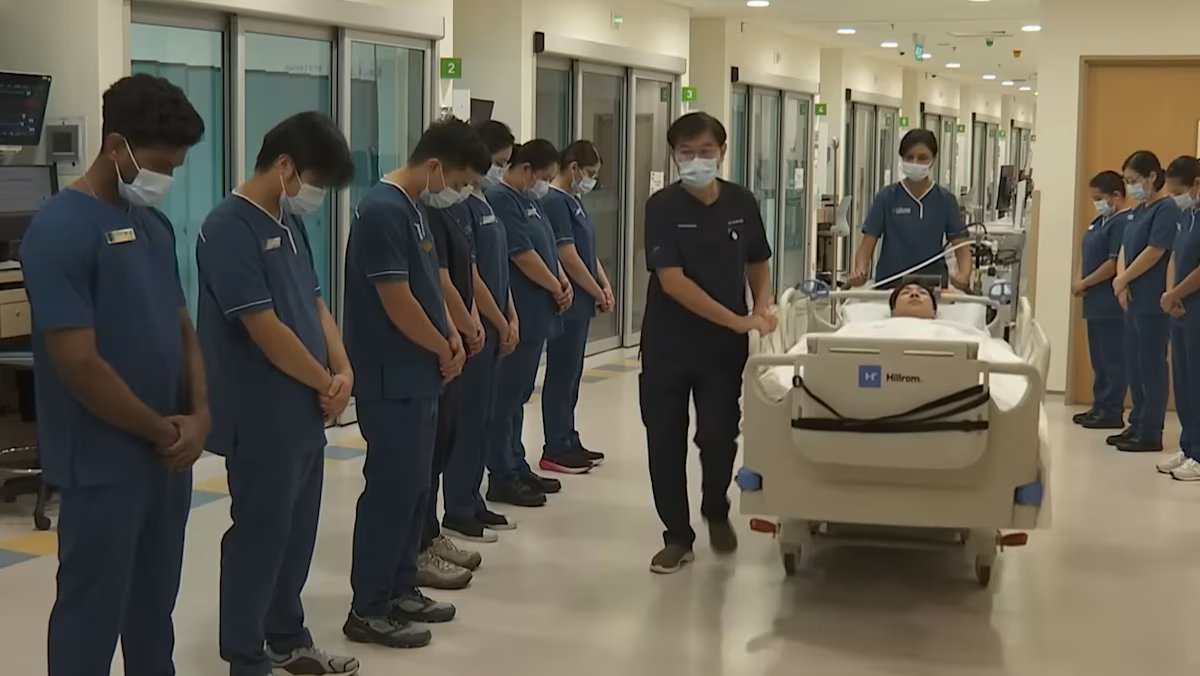
Having discussions about organ donation can be quite delicate, as noted by Ms. Kong, who recounted an instance where a donor’s son questioned whether his mother genuinely understood the laws and willingly consented to her decision. The healthcare team recognized the emotional turmoil the family was experiencing and provided essential support throughout the journey.
In instances where families are suddenly faced with loss, such support from healthcare providers can be crucial in navigating feelings of uncertainty versus clarity. “Ultimately, he found solace in knowing that his mother’s decision would positively impact many lives,” shared Ms. Kong. “This included not just the recipients, but also the family that benefited from her legacy.”
After the process, the son expressed his gratitude to the healthcare team for their compassion towards both his family and his mother, even inviting them to the wake to celebrate her lasting impact.
To better equip healthcare workers, regular training sessions are held on effectively navigating such conversations within end-of-life care contexts. Additionally, the MOH has initiated the Live On campaign to promote greater awareness and dialogue surrounding organ donation in Singapore.
For individuals wishing to express their organ donation preferences, they can easily log into the Organ Donor Registry using their Singpass to update their status.
- Organ donation can save lives, yet the number of donors remains low.
- Legal frameworks govern how organ donation is approached in Singapore.
- Conversations about donation preferences can significantly ease family decisions during difficult times.
- Healthcare providers receive training to support families through the organ donation process.