

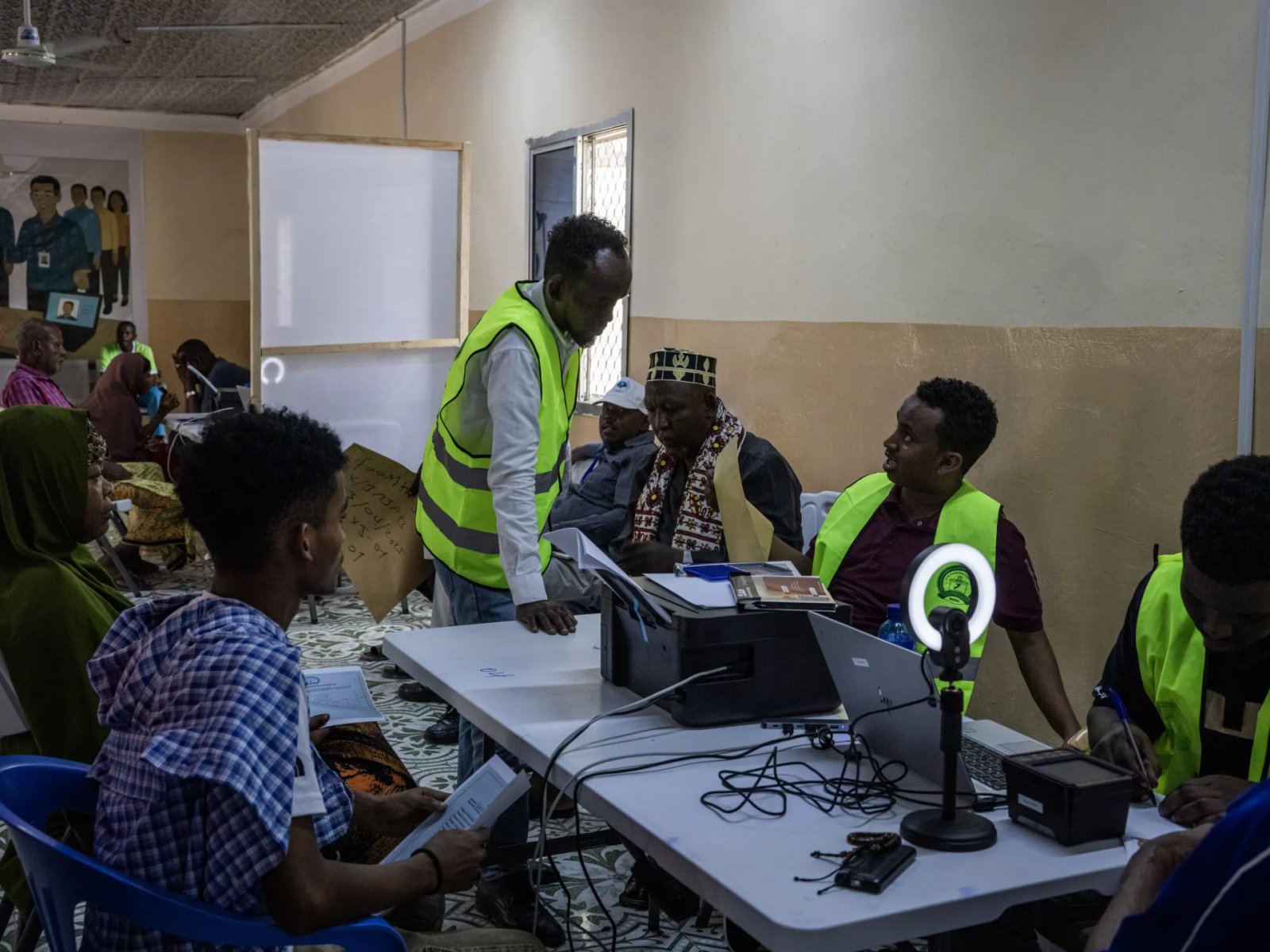
The Crossroads of Somali Politics: Challenges Ahead
For over 25 years, Somalia’s political landscape has been shaped by international efforts to ensure stability amidst turbulence. As the nation reaches a perilous juncture, the government’s unilateral quest for power—cloaked in the guise of democratic reform—risks triggering a legitimacy crisis that could undo decades of progress and investment.
The Ideal of Universal Suffrage
Universal suffrage is a common aspiration shared among the Somali people. Yet, the implementation of this ideal faces monumental hurdles, including deep-seated political divisions, ongoing security threats, the impending expiration of the government’s mandate, and financial limitations. Without political consensus, adequate institutional readiness, or essential security measures in place, the quest for universal suffrage could undermine democracy and concentrate power within the current government, increasing the danger of fragmentation and competing authorities.
Power Dynamics at Play
Rather than fortifying these critical elements through collaboration, the government appears focused on consolidating power. This has included unilateral constitutional changes that disrupt the existing political framework, along with the introduction of laws that favor its own interests in electoral processes and party governance. Additionally, the appointment of 18 commissioners, all aligned with the ruling Justice and Solidarity Party (JSP), raises questions about the fairness of the upcoming electoral landscape.
Challenges from Somaliland and Political Opposition
Since declaring independence in 1991, Somaliland has sought recognition, highlighting the fragmentation within Somalia. Many opposition groups, as well as leaders from Puntland and Jubbaland Federal Member States, have opposed the government’s current strategies and formed the Council for the Future of Somalia. This coalition aims to conduct a political convention, indicating a readiness to explore alternative approaches should the government remain unyielding.
Security Issues and the Role of Al-Shabab
The Federal Government of Somalia does not exert full control over the nation; regions remain under the influence of Al-Shabab, which is capable of conducting operations far beyond its grasp. A recent attack on a prison near Villa Somalia starkly illustrates the precarious security situation that any electoral process would face.
Looking Towards 2026
Given the high levels of polarization and the tight timeline under the current mandate, immediate international intervention is critical for Somalia’s sixth political transition planned for 2026. A viable strategy revolves around enhancing the indirect election model, a method the Somali political landscape has employed effectively over the past 25 years. However, to ensure its success, this model must adhere to principles of timeliness, feasibility, competitiveness, and inclusivity.
The current government mandate concludes on May 15, 2026, and discussions have already surfaced regarding a potential unilateral term extension, which must be discouraged. Should an agreement materialize in time, a technical extension may be warranted, but only if the electoral processes for 2026 are actively progressing. Establishing a firm deadline for elections could help alleviate recurring crises, similar to Puntland’s successful five-year electoral schedule.
Establishing an Inclusive Election Model
The improved indirect election model should be user-friendly and practical, allowing political factions to agree on a set number of delegates for each electoral seat. Traditional elders from constituencies can select delegates, who would then collectively choose candidates. While this may not be the ideal approach, it is a feasible option given prevailing conditions.
Unlike in previous elections, where manipulation reduced genuine competition, the upcoming electoral process must be both competitive and inclusive. A definitive “no manipulation” and “no bestman” threshold must be established to ensure a fair selection process. Moreover, women’s representation in parliament, which should ideally constitute about 30 percent, must be protected, with institutions empowered to enforce this quota.
Addressing Corruption
Corruption has long plagued Somalia’s electoral procedures, undermining their credibility. In 2022, Federal Member State leaders influenced the electoral process to serve their interests. A potential solution for the 2026 model involves aggregating constituencies to increase the number of voters per seat, which could diminish opportunities for vote buying and promote integrity.
A Unified Political Agenda
The international community has previously challenged Somali political figures to unite, emphasizing that there should be “no term extensions or unilateral elections” and “no parallel political agendas.” It is crucial to define clear political boundaries moving forward. The government should avoid extending its term or conducting any unilateral electoral initiatives, while opposition groups should also refrain from pursuing divergent political projects.
Conclusion: The Path Forward
Somalis have demonstrated clear democratic aspirations; however, elite polarization and the manipulation of reforms threaten these ambitions. Now is the time for the international community to remain actively engaged, ensuring that past achievements are not lost and that investments in Somali peace and governance are protected.
Key Takeaways
- Somalia faces a crucial moment that could derail years of political progress.
- Achieving universal suffrage requires addressing deep-rooted political and security challenges.
- The international community’s proactive involvement is essential for a successful political transition in 2026.
- Establishing a fair, inclusive, and corruption-free electoral process is vital for the country’s future stability.