

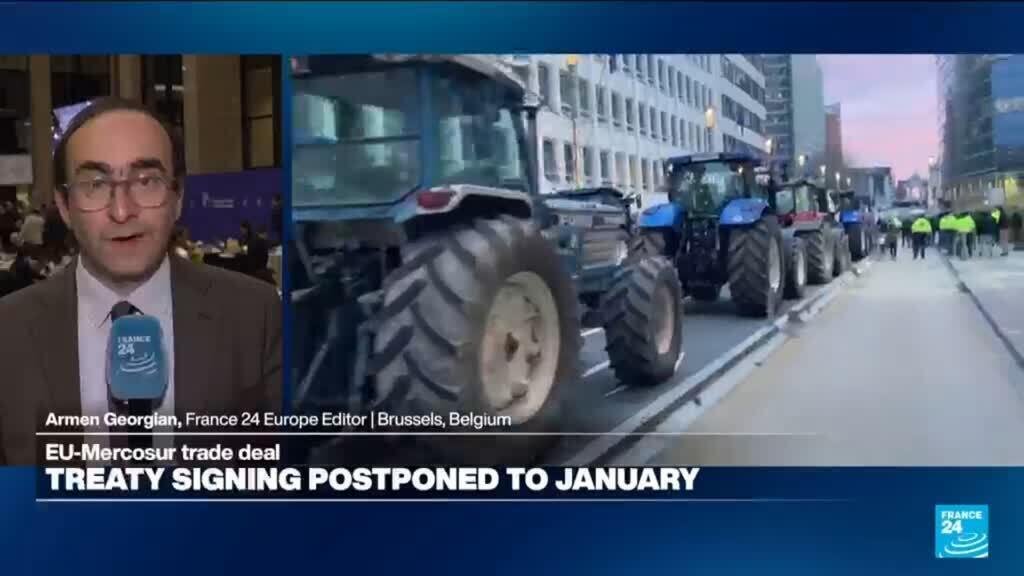
Free Trade Agreement with Mercosur Delayed Until January
In recent discussions at a summit in Brussels, EU leaders received news from EU chief Ursula von der Leyen regarding a postponed free trade agreement with the South American trade bloc, Mercosur. Originally, the European Commission aimed to finalize the deal this week, which would establish the largest free-trade area in the world. However, due to pressure from Italy and France for additional protections for their agricultural sectors, the timeline has shifted.
Context and Background
The agreement between the EU and Mercosur has been a topic of significant interest and negotiation. The intent behind this trade pact is to not only strengthen economic ties but also to enhance market access for various sectors. With Europe seeking to expand its trade horizons, this deal represents a critical step towards greater integration with South America.
Reasons for the Delay
The demand for a delay primarily stems from concerns over the impact this agreement could have on local farmers. Both France and Italy, two major players within the EU, have articulated the need for more robust safeguards to protect their agricultural industries from potential competition arising from imports. This sentiment indicates a cautious approach among EU member states as they navigate the complexities of global trade.
Response from EU Leaders
Leaders from various EU nations have expressed their stances during the summit, with many agreeing on the necessity of additional measures to support their farmers. The discussions highlighted the delicate balance that the EU must maintain between fostering international trade relations and ensuring the livelihoods of its agricultural workforce.
Looking Ahead
With the deadline now set for January, the European Commission will need to engage in further discussions with member states to address their concerns. The hope is to reach a consensus that facilitates the signing of the agreement while also providing necessary protections for vulnerable sectors.
Conclusion
The postponement of the EU-Mercosur trade deal underscores the complexities involved in international agreements, especially in sectors sensitive to market fluctuations. As Europe prepares for further negotiations, the emphasis will remain on finding a compromise that satisfies both economic ambitions and local needs.
Key Takeaways
- The signing of the EU-Mercosur free trade deal has been postponed until January.
- Italy and France have called for delays due to concerns over agricultural protections.
- The agreement aims to establish the world’s largest free-trade area.
- Future negotiations will seek to address EU member states’ concerns while facilitating trade.