

The Quagga Mussel Invasion: A Lake in Crisis
The rapid spread of quagga mussels in Lake Geneva has caused significant challenges for the Swiss Federal Technology Institute of Lausanne (EPFL). Over just a few years, these invasive mollusks have infiltrated essential systems, leading to decreased operational efficiency and threatening vital research activities. This article explores the urgent implications of this invasion, the ecological shifts in Lake Geneva, and the possible future outcomes for this unique environment.
A Troubling Discovery
The quagga mussels have made their mark ominously, much like cholesterol blocking an artery. Initially detected in Lake Geneva only six years ago, they have quickly propagated through the cooling systems that draw water from 75 meters (250 feet) deep. The impact has been substantial; some heat exchangers lost up to a third of their efficiency while temperature control in buildings became problematic, with air conditioning units struggling to maintain a comfortable environment. “It’s an open invasion,” states Mathurin Dupanier, the utilities operations manager at EPFL.
Wider Impacts on Research
The consequences extend well beyond the discomfort in classrooms. For the institute’s datacenters, maintaining stable temperatures is crucial for ongoing experiments. “If that stops, the school shuts down,” Dupanier explains. Additionally, the EPFL is home to Tokamak, a nuclear fusion facility that requires precise cooling to avoid catastrophic failures.
As quagga mussels proliferate, risks to critical water supply systems become increasingly clear. Drinking water supplies in Geneva and Lausanne are now under threat due to these mussels infiltrating pumping and filtration systems, which also impacts local airports. “Every institution around the lake faces this issue; no one is exempt,” warns Dupanier.
Unprecedented Proliferation
Quagga mussels, known for their astonishing reproductive abilities—one female can produce up to a million eggs—represent some of the most formidable invasive species. They can breed year-round, even in low temperatures, demonstrating adaptability that allows them to flourish in challenging environments.
“We were in denial about the invasion,” recalls Dupanier, referring to the shock felt when the scale of the problem was fully realized in 2022. The expansion of the mussels has already demonstrated their capacity for rapid growth, leading to fears about future infrastructure vulnerabilities.
A Change Beneath the Surface
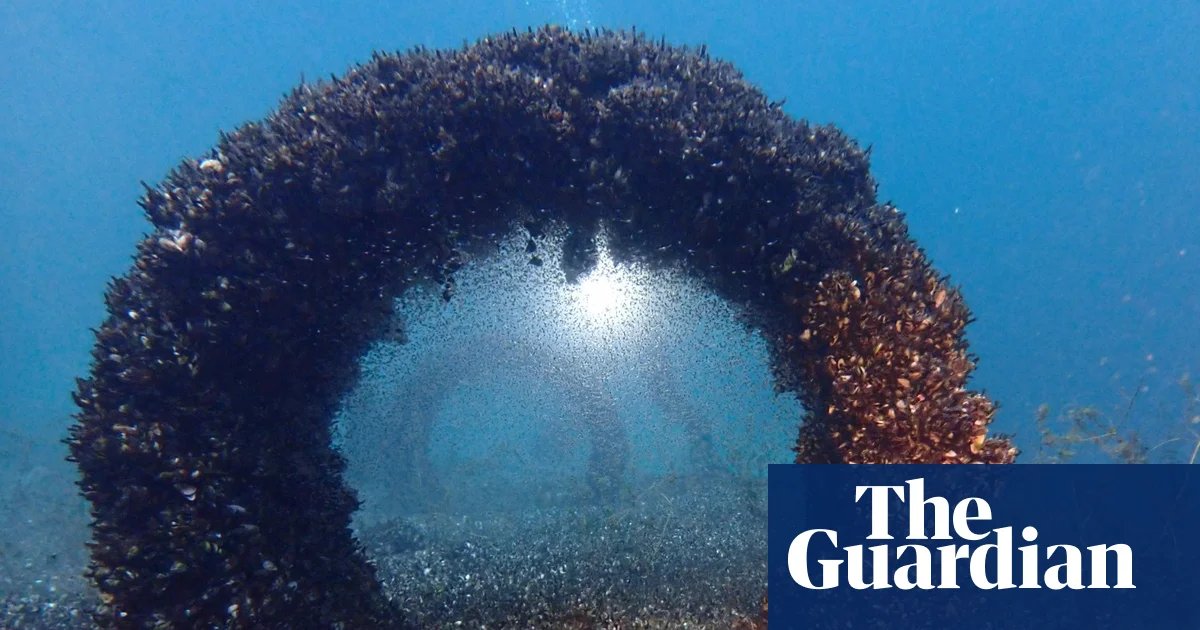
From a floating research station, the outward appearance of Lake Geneva remains picturesque, yet the reality beneath is complex and alarming. “The surface is just a tiny part of the 300 metres below us,” notes ecologist Bastiaan Ibelings from the University of Geneva. Recently, researchers are pulling up a chain from the depths, heavily encrusted with quagga mussels, drastically altering the lake’s food web.
According to Ibelings, “It’s too late for this lake. It’s become a meadow of quaggas.” The mussels have reached record depths of 250 meters, a stark transformation for a body of water that was once home to diverse aquatic life.
Environmental Consequences
The invasion of quagga mussels has disrupted the ecosystem dramatically. Traditional food sources for fish, such as snails and native mussels, have diminished, leading to potential collapse in local fish populations. With quaggas filtering an impressive two liters of water a day, they not only alter water clarity but also promote the growth of harmful algal blooms by changing nutrient dynamics. “Going back is a fairytale,” laments Ibelings, emphasizing the lasting impact these mussels and climate change have imposed on Lake Geneva.
Looking Ahead
EPFL and the University of Lausanne plan to install a new closed-loop cooling system by 2027 to combat the quagga invasion. However, these measures may only provide a temporary reprieve. Understanding and addressing the consequences of this invasive species is paramount as ecologists predict that the lake will never revert to its original state.
Conclusion
The quagga mussel invasion in Lake Geneva highlights a critical environmental dilemma. With immediate challenges around water quality and ecological balance, it is evident that urgent solutions and further research are necessary to mitigate the long-term effects of this invasive species on local ecosystems and human activity.
Key Takeaways
- Quagga mussels have rapidly invaded Lake Geneva, significantly impacting local infrastructure.
- The mussels threaten vital research facilities and drinking water sources in the region.
- Ecological changes are profound, jeopardizing native species and altering food webs.
- Future efforts will focus on building protective systems to manage the invasion’s impact.