

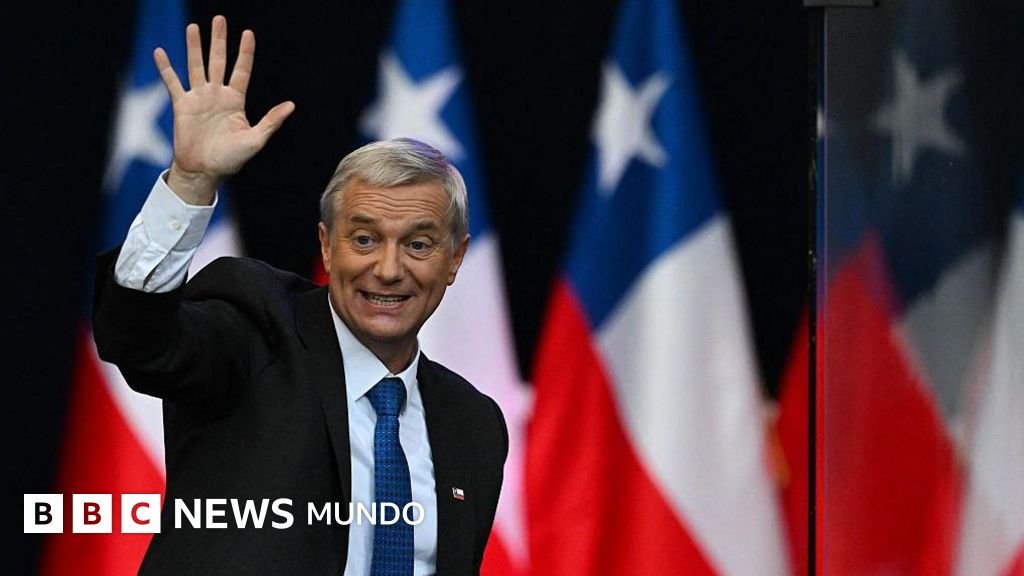
José Antonio Kast: The Unexpected Rise to Power in Chile
José Antonio Kast’s ascension to the presidency of Chile at 59 with a focus on security was unforeseen, even by his closest allies. This article delves into his improbable journey, his political strategies, and the complex legacy he carries with him.
The Unlikely Candidate
Reflecting on the past, Rodrigo Pérez Stiepovic, a longtime friend, recalls their legal studies together at the Universidad Católica in 1984. “It was hard to envision him as a candidate,” he shared. Kast himself has mentioned that the first time he considered a presidential run, a friend’s response was far from encouraging: “No, you’ve lost your mind.” Yet, this past Sunday, Kast was elected with a decisive 58.2% of the votes in a runoff against the communist candidate, Jeannette Jara, who garnered 41.8% according to preliminary results with over 99% of ballots counted. This victory marks Kast’s third attempt at the presidency.
Political Journey and Ideology
Before the Presidency
Kast faced defeats in previous elections, coming in second to leftist president Gabriel Boric by a margin of 12 points in 2021, and securing a mere 8% of the vote in 2017. Focusing heavily on security during his campaign, he flipped the results from the first round of voting, where Jara had surpassed him by three points.
His success can be linked not only to his appeal among disillusioned voters but also to a coalition of various right-wing factions. His campaign received backing from defeated candidates like Johannes Kaiser from the libertarian party and Evelyn Matthei of the conservative faction.
Roots and Controversy
Kast was born in Paine, a suburb of Santiago, to German immigrant parents. His father, Michael Kast, served in the German army during WWII, a past that has drawn media scrutiny. José Antonio has stated that his father enlisted under duress to avoid imprisonment; however, investigations later suggested he was a member of the Nazi Party.
Stance on Human Rights and History
Kast’s relationship with history is complex. He has expressed admiration for Augusto Pinochet’s military regime (1973-1990), controversial for its human rights violations. His brother Miguel held a prominent position in Pinochet’s government, raising further questions about their family’s political legacy. While Kast has often distanced himself from accusations of endorsing human rights abuses, his comments referencing the military government have sparked outrage among those who suffered under its rule.
A New Right
Kast’s political career began at the Universidad Católica, where he was part of the Gremial Movement established by Jaime Guzmán, a close ally of Pinochet and the architect of the current Constitution. After serving as a councilor and a deputy for the right-wing Union Democrática Independiente (UDI), he departed from the party, claiming a need to break from “political correctness” and founded the Chilean Republican Party.
Despite setbacks in previous elections, his recent win reveals the growing influence of his political movement. Some analysts describe Kast’s approach as representing a “new” right, akin to national populism, drawing parallels with international figures like Donald Trump and Javier Milei. His campaign promises included strict immigration controls reminiscent of Trump’s initiatives, asserting the need for increased security measures to address public concerns.
Conclusion
José Antonio Kast’s unexpected rise to Chile’s presidency demonstrates a significant shift in the political landscape, marked by an embrace of populist rhetoric and a focus on security issues. As he embarks on this new chapter, his challenge will be to maintain support from a diverse conservative base while navigating the complexities of governance in a changing nation.
Key Takeaways:
- Kast emerged victorious with 58.2% of the votes in the recent presidential runoff.
- His political journey includes significant defeats, setting the stage for a dramatic comeback focused on security.
- Controversies surrounding his family history and views on past regimes continue to influence public perception.
- Kast’s election signals a notable shift in Chilean politics towards a populist and nationalist right.