

The Evolving Dynamics of the Mecca Defence Pact Amid Houthi Aggressions
Recent events have highlighted escalated tensions in the Middle East, particularly with Yemen’s Houthi rebels seizing control of Mocha port, posing a significant threat to the key Bab al-Mandeb strait. With their array of attacks on various cities in Saudi Arabia, resulting in injuries to around 70 individuals, including women and children, the situation raises critical questions about the Mecca Pact—a mutual defence agreement between Saudi Arabia, Turkey, and Pakistan. This article delves into what the operationalization of this pact could entail, especially in light of Houthi aggression.
Context and Background
The United States, long considered the primary security partner for Gulf states, has indicated a shift toward encouraging regional nations to manage their own defence responsibilities. While the U.S. support remains essential, its capacity is increasingly limited. Since the onset of the U.S.-Israel hostilities concerning Iran, the U.S. has struggled to offer comprehensive protection to its allies, sometimes failing to prevent attacks on its military bases in the Gulf.
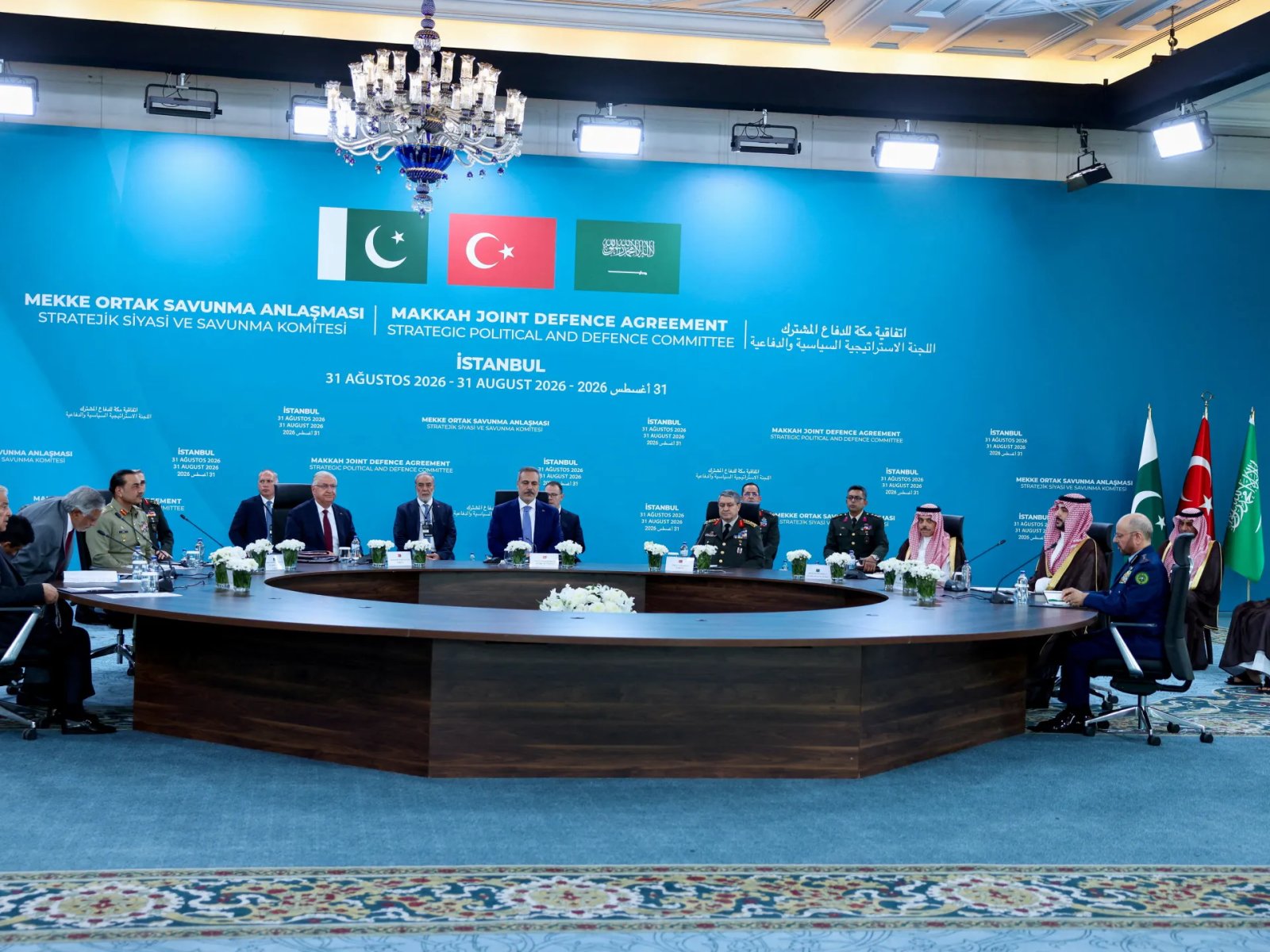
In this context, Gulf states are reevaluating their defence architectures. Notably, Saudi Arabia and Pakistan formalized their mutual defence cooperation with an agreement first signed in September 2025, expanding to include Turkey in August of the following year and becoming known as the Mecca Joint Defence Agreement. This agreement established a joint secretariat based in Riyadh, with Pakistan assuming the chairmanship for an initial three-year period.
Understanding the Mecca Pact’s Implementation
Despite its creation, the Mecca Pact is still in its initial stages. It does not publicly define the scenarios that would lead to military intervention, nor have its rules of engagement or consultation mechanisms been formally developed.
Potential Activation of the Pact
Recently, Pakistan’s Defence Minister Khawaja Asif emphasized that any unprovoked aggression directed at Saudi Arabia—including spillovers from the Yemen conflict—would activate the Mecca Joint Defence Agreement. Though he did not specify how this would manifest, clarity was provided by Turkey’s Foreign Minister Hakan Fidan, likening the pact’s operation to NATO’s framework. This means that if a member state is attacked, it must actively seek assistance and specify its requirements.
NATO Comparisons
NATO’s Article 4 allows for member consultations when facing threats, while Article 5 mandates mutual assistance, allowing nations to determine the form it takes. For instance, in 2012, Turkey invoked Article 4 after Syria downed one of its warplanes, requesting specific defence systems instead of direct military action. NATO responded favorably.
In similar circumstances, Saudi Arabia would need to delineate the type of military assistance it requires should it choose to invoke the Mecca Pact. For instance, if Riyadh seeks direct military involvement from Pakistan, Islamabad would be obligated to respond, although the nature and extent of that response would require mutual agreement through consultation.
Diplomatic Moves and Future Possibilities
As of now, Riyadh has not officially invoked the pact, keeping actions largely hypothetical. In reaction to worsening tensions, diplomatic engagements have escalated. Notably, discussions involving the Pakistani Field Marshal Asim Munir, Saudi Foreign Minister Prince Faisal bin Farhan Al Saud, and Iranian Foreign Minister Abbas Araghchi have taken place. Pakistan has urged Iran to control the Houthi aggressions threatening Saudi Arabia and the strategic Bab al-Mandeb strait, reaffirming its commitment to Riyadh’s defence through the pact.
Turkey is also expected to play a role in diplomatically addressing the threats posed by the Houthis and Iran. Should diplomatic channels fail, it is anticipated that Turkey and Pakistan may enhance the air and technological support they offer, with Pakistan having already stationed an air squadron and troops in Saudi Arabia.
However, a direct military intervention by Pakistani forces within Yemen remains unlikely due to the repercussions of its historical involvement in the Afghan war. Pakistani leaders are likely to hesitate about direct military engagement with Iran and its allies, given the potential for domestic unrest and sectarian tensions.
Conclusion
In the evolving landscape of Middle Eastern geopolitics, the Mecca Pact serves as a critical framework for collective security among Saudi Arabia, Turkey, and Pakistan. It underscores the necessity for these nations to not only bolster their own military capabilities but also engage in strategic diplomacy to mitigate rising threats from factions like the Houthis. As this new security arrangement develops over time, it will be essential to observe how its mechanisms are refined and operationalized.
Key Takeaways
- The Mecca Pact is central to addressing mutual defence between Saudi Arabia, Turkey, and Pakistan amid Houthi threats.
- Operationalization of the pact remains undefined and requires member nations to specify their needs during a crisis.
- Diplomatic engagements are critical; Pakistan and Turkey are actively working to restrain Houthi aggressions.
- Direct military action by Pakistani forces in Yemen is currently seen as unlikely, focusing instead on diplomatic and technological support.