

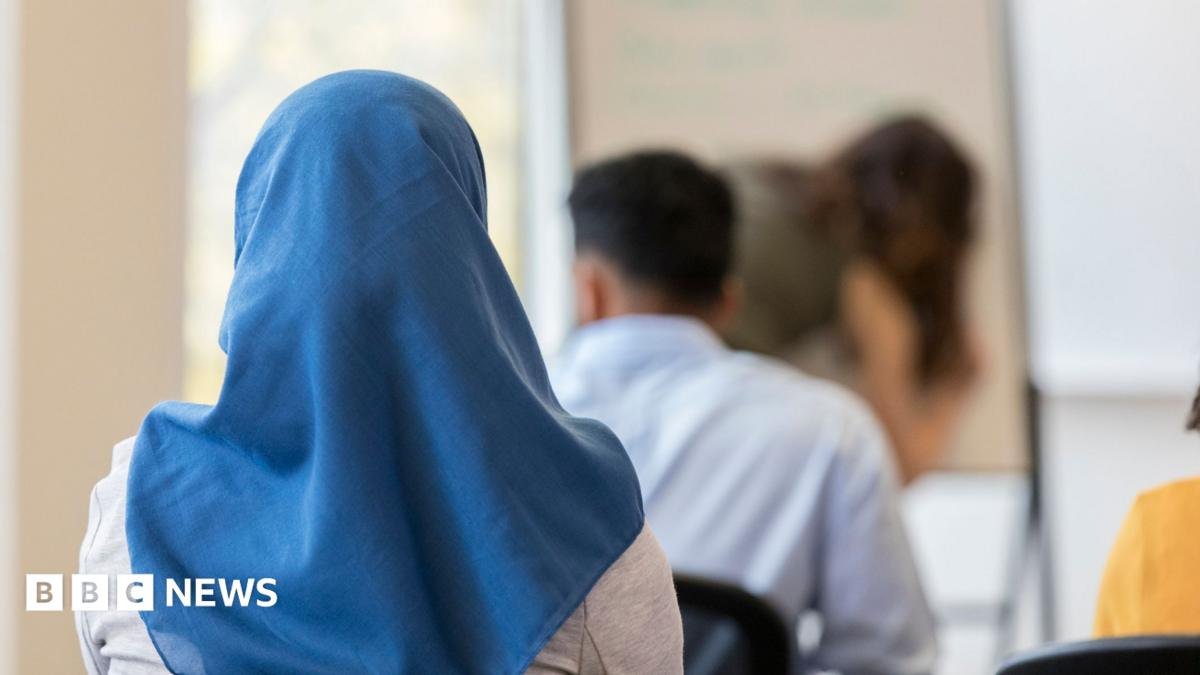
Concerns Over Religious Symbol Ban in Austria’s Schools
Recent discussions surrounding the ban on religious symbols in Austrian schools have elicited varied reactions from educators and political leaders alike. Teachers are finding themselves at the center of a heated debate, with some expressing apprehension about the responsibilities this ban places on them. In this article, we will explore the differing perspectives regarding the ban and its implications within the educational environment.
Teachers’ Frontline Concerns
Many teachers are worried about the burden of enforcing the new regulations. Sigi Maurer from the Green Party has voiced her criticism towards Education Minister Christoph Wiederkehr of the NEOS political party. She argues that Wiederkehr is shifting conflicts onto educators who are already managing significant pressures.
Maurer emphasized that teachers should not have to act as enforcers of the law, suggesting it feels like an added responsibility of policing on top of their already demanding roles.
Political Perspectives on the Ban
The political landscape surrounding the ban is complex. The far-right Freedom Party (FPÖ) believes that the existing restrictions do not go far enough, calling for an outright ban on all headscarves and face coverings for both students and teachers. FPÖ representative Ricarda Berger declared that “there is no place for political Islam in Austria, especially not within our educational institutions.”
Chancellor Christian Stocker of the ÖVP has furthermore advocated for a constitutional prohibition on political Islam, expressing his wish to avoid living in an “Islamic state.” This sentiment underscores the tension between political ideals and public education.
Comparative Context: France’s Approach
For over two decades, France has implemented a ban on conspicuous religious symbols, including headscarves, turbans, and kippas, within schools. However, the Austrian legislation is noted for its specific targeting of Muslim women’s head coverings, setting it apart from the broader French policy.
Austria, along with other European nations like Belgium and Denmark, prohibits full face veils like niqabs and burkas in public spaces. This raises questions about the underlying motivations and intentions behind such legislation.
Concerns About Symbolic Solutions
IGGÖ’s Baghajati has raised alarms over what she sees as a “troubling trend” across Europe, where complex social challenges are being addressed through measures that appear to target minority groups. She believes that while such policies may attract political interest, they seldom address the root causes of societal issues.
Conclusion
The debate over the ban on religious symbols in Austrian schools reveals deep divisions in opinion among educators, politicians, and society at large. As the discussion continues, the focus remains on balancing educational duties with broader social values, all while considering the implications for the future of Austria’s diverse student population.
Key Takeaways
- Teachers are facing increased pressures due to the enforcement of a religious symbol ban in schools.
- The far-right FPÖ is advocating for more stringent restrictions on religious headwear.
- Austrian legislation specifically targets Muslim women’s head coverings, differing from France’s broader ban on religious symbols.
- Critics warn that such symbolic measures seldom resolve deeper societal issues.