

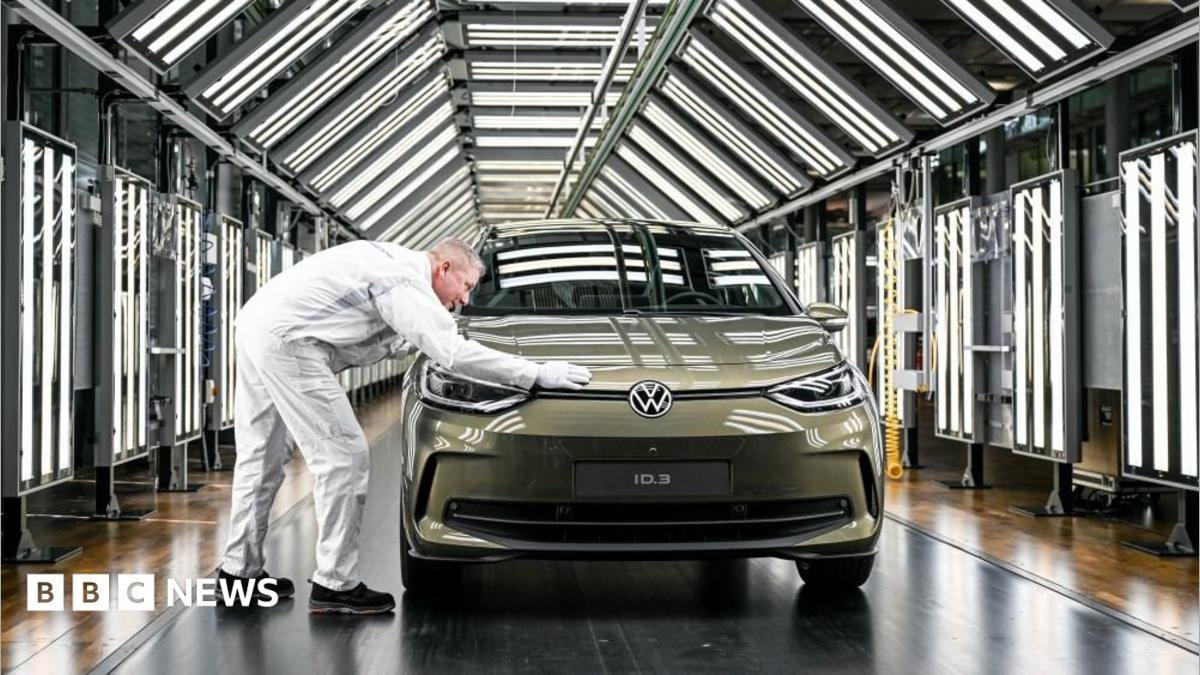
Volkswagen’s Major Job Cuts and Restructuring Plan
Volkswagen, the renowned German automotive manufacturer, is set to implement a significant restructuring strategy aimed at cutting 50,000 jobs. This decision comes as part of a broader initiative to streamline operations and ensure the company’s competitiveness in an ever-changing market. By 2030, the total number of jobs expected to be eliminated will reach 100,000 across its various brands, including Audi, Porsche, and Skoda, among others.
The Landscape of Change
In a statement made by CEO Oliver Blume, he characterized this move as a “strong signal” of the company’s commitment to its workforce while addressing the pressing issues the business currently faces. He emphasized the need for responsibility towards employees as Volkswagen navigates these challenging times.
Profit Decline and Market Pressures
The company has been grappling with declining profits attributed to reduced sales and stiff competition, particularly from emerging Chinese automotive brands. In response to these challenges, Volkswagen aims to halve its model offerings by 2035 and significantly reduce complexity across its product line.
Strategic Focus and Cost Efficiency
According to Volkswagen, the plan will shift the focus towards “the most compelling vehicles” while optimizing production volumes for each model. This approach is expected to contribute to cost reductions and ensure long-term sustainability for the company.
Adapting Workforce for Future Needs
Volkswagen acknowledges that a “fundamental adjustment of the global workforce capability is necessary” to remain competitive amid evolving consumer demands and technological innovations. The restructuring plan includes a workforce reassessment that affects approximately 50,000 positions, including those in management roles.
Future of Manufacturing Facilities
Additionally, Volkswagen is evaluating the future of its plants in Emden, Zwickau, Hanover, and Neckarsulm, where production capacity currently surpasses demand. The company is exploring alternative uses for these facilities to better align with market needs.
A Historic Restructuring
This marks the most extensive restructuring effort in Volkswagen’s nearly 90-year history. As of 2025, the company employs over 660,000 individuals globally and operates numerous prestigious brands, including Seat, Bentley, and Lamborghini.
Response from Labor Leadership
Christianne Benner, the president of IG Metall—Europe’s largest industrial union—and deputy chair of Volkswagen’s Supervisory Board, noted that the company had “fought hard for good solutions” to navigate a “crisis situation.” Her insights illuminate the significant impact these changes will have on the workforce.
Challenges in Key Markets
Volkswagen’s profitability has sharply declined, particularly in China, which was once a key market for the automaker. Sales have also witnessed a downturn in the US, influenced by tariffs imposed on imported vehicles during the previous administration. Meanwhile, aggressive expansion from Chinese automakers, like BYD, has enabled them to capture significant market shares across various regions.
Conclusion
As Volkswagen embarks on this monumental restructuring journey, the impending job cuts and operational changes aim to enhance efficiency and affirm the company’s resilience in the face of market volatility. The overarching goal is to position Volkswagen for sustainable success in an increasingly competitive automotive landscape.
Key Takeaways
- Volkswagen plans to cut 50,000 jobs, totaling 100,000 by 2030.
- The company will halve its model offerings by 2035.
- Reassessment of workforce and manufacturing facilities is underway.
- Volkswagen faces intense competition from emerging Chinese car manufacturers.